
Scooter & Naked Bike, Electric Scooters vs Motorcycle Scooters, eScooter, Naked Bike, Scooter Motorcycle
Scooter vs Naked Bike: Which Is Easier for Beginners?
Jul
Scooter vs Naked Bike: Crowded roads and jam-packed MRT rides leave many Singaporeans searching for a quicker way to get around. Picking the right first bike can be confusing. Scooter vs naked bike: which is easier for beginners? That choice matters if you want safe, smooth commutes. Some say scooters are simple to master while others claim naked bikes offer more control. But what actually suits a new rider in Singapore’s busy city streets?
This post compares both types—handling, comfort, learning curve, and real-world riding. We’ll also touch on what local laws mean for your decision. If you’re thinking about ditching four wheels for two, you’re in the right place. Let’s break it down step by step.
Scooter vs Naked Bike: The Beginner’s Dilemma for Singapore Riders
Scooter vs Naked Bike: Thinking about your first two-wheeler in Singapore? The Scooter vs Naked Bike debate is a classic dilemma for beginners aiming to beat city traffic and zip through the Lion City efficiently. This comprehensive guide is designed to help new riders in Singapore weigh the real-world pros and cons of each type, with a special focus on local conditions like LTA rules, traffic environments, and lifestyle needs.
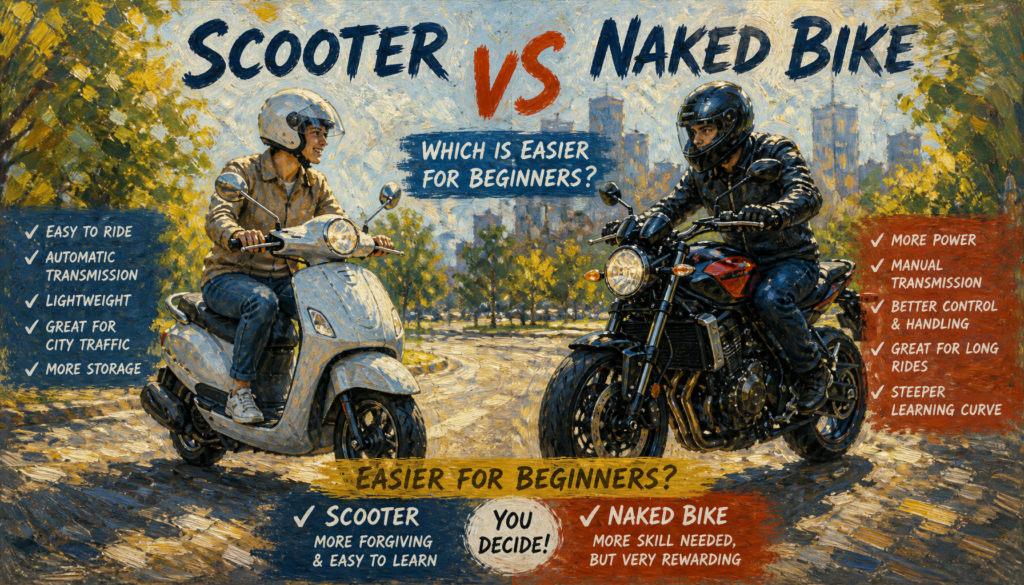
Riding ease is often the number one concern for first-timers. Scooters are renowned for their automatic transmission and lightweight build. This translates to a notably gentle learning curve, letting beginners focus on the road rather than mastering clutch control. By contrast, naked bikes come fitted with manual gearboxes, calling for extra coordination and a bit more patience during early rides. For Singaporeans just passing their Class 2B, a scooter may offer a less intimidating entry point, while naked bikes might appeal to those willing to invest time in skill-building for more versatile riding.
Scooter vs Naked Bike: When it comes to city compatibility, traffic navigation is crucial. Scooters shine on tight urban roads and in stop-and-go situations—think rush-hour on our city streets or weaving down busy HDB corridors to secure parking. Meanwhile, naked bikes deliver better acceleration for open stretches and expressways, though their manual controls can become tiring during jams or frequent stops. Both types, however, can handle the PCN (Park Connector Network) and tight parking spaces commonly found around Singapore’s city centre and heartlands.
Practical considerations like insurance, storage, and running costs close the gap between fantasy and real ownership—especially in a country where affordability and space matter. This guide will break down not only how scooters vs naked bikes excel in these areas, but also provide tips to ensure new riders make the smartest, most enjoyable choice for daily life in Singapore. Whichever you lean towards, understanding these key factors will keep you confident as you set out on two wheels.
Ease of Riding: Which Is More Beginner Friendly in Singapore?
Scooter vs Naked Bike: Scooters are widely regarded as one of the most beginner-friendly options for urban commutes, especially in Singapore. Their automatic transmission eliminates the need for gear-shifting and clutch control, which can be intimidating for new riders. The lightweight and compact build of most scooters makes them easy to maneuver, whether you’re navigating narrow HDB carpark ramps or tight spots at MRT stations. For those looking to get on the road quickly with minimal hassle, scooters provide a smooth introduction to city riding—just twist the throttle and go.
In contrast, naked bikes typically come equipped with manual gearboxes, requiring new riders to master coordination between throttle, clutch, and gear shifts. This increases the learning curve, especially in stop-and-go Singaporean traffic where frequent gear changes are necessary. While some riders appreciate the more direct connection naked bikes offer, beginners might find the constant juggling in heavy city traffic stressful. However, for those eager to learn comprehensive riding skills, starting with a naked bike can build confidence and control over time.
Scooter vs Naked Bike: Singapore’s licensing structure further impacts your choice. Many scooters fall within the Class 2B license (up to 200cc), typically the entry point for most new riders. While some naked bikes are also 2B-compliant, their manual transmission may deter less experienced riders. An automatic scooter reduces licensing test anxieties, letting beginners focus on traffic rules instead of gear management during their TP tests. This advantage can speed up the transition from CDC riding lessons to real-world travel for commuters.
Ultimately, if your priority is an easy, stress-free start to your two-wheel journey, especially amidst Singapore’s dense road conditions, scooters have the clear advantage. Naked bikes, while rewarding and versatile in the hands of more experienced users, generally require a steeper learning commitment. For first-time buyers considering Scooter vs Naked Bike, choosing a scooter means quicker mastery and less stress—just the right fit for Singapore’s fast-paced urban life.
Quick Specs: Scooter vs Naked Bike Specs at a Glance
| Feature | Scooter | Naked Bike |
|---|---|---|
| Engine Capacity Range | 50–200cc | 150–500cc+ |
| Transmission Type | Automatic | Manual (with clutch) |
| Typical Weight | Lightweight | Moderate to Heavy |
| Seat Height | Low, accessible | Moderate to Tall |
| Storage Options | Under-seat storage, small compartments | Minimal, usually requires add-ons |
| Fuel Consumption (city) | High efficiency, very economical | Varies, moderate to good |
Scooter vs Naked Bike – when it comes to picking your first ride in Singapore, quick specs like the ones above can help clear up your choices. Scooters stand out for their light weight and automatic transmission, which is a big plus if you’re new to two-wheelers and city riding. The low seat height also means more comfort and confidence at traffic stops, especially on Singapore’s busy streets.
Naked bikes, while offering more engine options and sometimes better open-road performance, usually require manual shifting and clutch control, adding a layer of learning for beginners. Their seating position is generally higher and more aggressive, ideal for those planning to commute longer distances or eventually tackle expressways.
Practicality matters in Singapore. Scooters often win with built-in storage for essentials or your daily shopping, useful for HDB dwellers hoping to maximise space. Fuel efficiency is another highlight for scooters, keeping running costs low for daily city riding—something all riders in Singapore should keep in mind. With these specs in mind, you can better weigh which type fits your needs and comfort as you shop for your next ride.
Commuting in Singapore: Urban Navigation, Parking, and Traffic Performance
Scooter vs Naked Bike: Navigating Singapore’s dense urban environment poses unique challenges for new riders weighing Scooter vs Naked Bike choices. Scooters, known for their lightweight frames and automatic transmissions, make weaving through CBD traffic, tight HDB estate roads, and crowded shopping areas a breeze. Beginners appreciate the twist-and-go simplicity—no clutch or gear-shifting to worry about in unpredictable stop-and-go conditions, which is common on our busy roads.
In contrast, naked bikes feature manual gearboxes demanding more focus and coordination, especially in traffic jams or frequent stoplights along Orchard Road or during peak hour commutes on Nicoll Highway. While naked bikes offer superior acceleration and handling on open stretches or expressways (where higher engine capacities shine), new riders may find clutch control and frequent gear changes tiring, particularly if their daily commute is confined mostly to city streets rather than highways.
Scooter vs Naked Bike: When it comes to parking, scooters frequently win out. Their compact size allows for easier slotting into tight HDB motorcycle lots or shared condo spaces—HDB guidelines specify marked motorcycle lots, which are often limited in prime areas. Scooters’ slim bodies are ideal for these busy parking zones, reducing the headache of hunting for a spot during lunch hour or in residential neighbourhoods. Naked bikes, generally larger and less nimble at low speeds, can be trickier to manage in crowded MC lots.
Lane splitting—while not formally legalised in Singapore—is commonly practised by local riders for expediency, especially when traffic stalls. Here, scooters have the advantage thanks to their quick maneuverability and narrower profiles, enabling riders to filter through stationary vehicles when safe to do so. This agility is particularly attractive for first-time bike owners prioritising stress-free daily commutes on Singapore’s perpetually busy roads.
Overall, for city-centric urban navigation, most beginners will find that scooters handle Singapore’s tight spaces, parking, and traffic snarls more efficiently than naked bikes, nudging first-time buyers toward the convenient scooter option for hassle-free commuting.
Performance vs Practicality: Engine Options and Daily Usability
Scooter vs Naked Bike: When comparing scooters vs naked bikes for daily riding in Singapore, engine size and performance play a big role in practicality and comfort. Scooters typically come with smaller engines, usually ranging from 50cc to 200cc. These engines are designed for efficiency rather than power, which means they provide enough speed for urban traffic while maintaining low fuel consumption. Most scooters have automatic transmissions, so you just twist and go—ideal for beginners facing Singapore’s busy roads.
On the other hand, naked bikes generally start at 150cc and can go beyond 500cc. This size difference translates to significantly more power and torque, especially noticeable in rapid acceleration and a higher top speed. Naked bikes are well-suited for commuters who travel longer expressway distances or desire stronger performance. However, these manual gearbox bikes require more riding skill, especially with clutch control in heavy stop-and-go traffic, which might not be as beginner-friendly.
Scooter vs Naked Bike: In real-world commuting, scooters shine in the city’s congested conditions. Their lower engine output is an advantage: they consume less petrol, often averaging much higher kilometres per litre compared to more powerful naked bikes. The responsive low-end torque of scooters, coupled with their lightweight build, also makes lane-splitting and squeeze-parking at HDB void decks easier—a daily convenience in land-scarce Singapore.
Naked bikes, with their larger engine displacement, offer punchier acceleration, which helps when merging on expressways or overtaking. However, this comes at the cost of increased fuel consumption, and the sportier ergonomics may not be as practical for city-center errands or short trips around town. For most Singaporeans focused on short commutes, affordability, and ease in traffic, scooters generally offer unbeatable practicality. But if you value more power for longer rides or have previous riding experience, a naked bike’s performance might outweigh pragmatic concerns.
Comfort, Ergonomics & Storage: Everyday Use in Singapore’s Urban Landscape
Scooter vs Naked Bike: In the context of Singapore’s bustling cityscape, comfort, ergonomics, and storage make a tangible difference in your daily commute – and here the debate between scooter vs naked bike narrows in on real, practical benefits. For urban riders who value seamless mobility, the scooter’s step-through frame brings a clear advantage. Hopping on and off is swift, whether you’re running errands or parking outside the coffeeshop. The upright seating and lower seat height on most scooters reduce fatigue during short rides through HDB estates or the Central Business District, suiting new riders who may not yet be comfortable with tall, heavy bikes.
Under-seat storage is another valuable asset on scooters. Carrying work essentials, stashing your raincoat, or even doing quick grocery runs is a breeze thanks to this built-in compartment. It’s especially handy considering Singapore’s unpredictable weather, letting you keep your rain gear or helmet safely locked away. This level of practicality aligns with everyday needs in Singapore, where storage space is often limited at home and at public HDB carparks.
In contrast, naked bikes adopt a sportier, more athletic riding position. Their upright stance is fine for longer highway commutes or rides out to the outskirts via PIE or AYE, offering a blend of control and comfort for experienced riders. However, they typically lack integrated storage – you’ll need to invest in top boxes or backpacks if you plan to carry more than the basics. Frequent riders who need to transport larger items may find this less ideal.
Ultimately, if your routine involves short hops between MRT stations, quick dashes to hawker centres, or frequent stops around the city, a scooter’s ease of use and ample storage make it the intuitive choice. For longer commutes where comfort at speed and a versatile riding position matter more, the naked bike’s design comes into play. When weighing scooter vs naked bike for Singaporean urban life, consider your daily needs and how each fits your lifestyle before making the leap.
Cost of Ownership: Purchase, Insurance, and Maintenance in Singapore
Scooter vs Naked Bike: When considering Scooter vs Naked Bike options, first-time buyers in Singapore need to look closely at the cost of ownership — this means more than just the sticker price. Generally, scooters tend to have a lower initial purchase price than naked bikes, making them attractive for new riders who are budget-conscious. Scooters’ popularity also helps keep prices competitive, especially among smaller engine (50–200cc) models, which often qualify for lower Category A COE premiums, further improving affordability.
Insurance is another key factor for Singaporeans. Usually, scooter insurance premiums are more affordable due to their smaller engine size and lower associated risk. Naked bikes, with their more powerful engines (typically 150–500cc+), may attract higher insurance rates, especially for younger or first-time policyholders. It’s important to get quotes based on your profile, but in most cases, beginners will find scooters easier to insure and sustain.
Scooter vs Naked Bike: Ongoing maintenance costs should also be planned for. Scooters usually have simpler mechanics, featuring automatic transmissions and lighter frames, which results in shorter service intervals and lower service bills. Replacement parts for popular scooter models are easy to source and competitively priced. In contrast, naked bikes—requiring manual gearboxes and sometimes larger, more complex engines—may need slightly more frequent servicing and tend to have higher spare part costs, especially for less common models.
Resale value is where Singapore’s market dynamics play a role. Well-kept scooters often retain strong resale value due to high commuter demand and familiar brands, while naked bikes appeal to a more niche group but can fetch good prices if maintained well. Ultimately, if your priority is lower upfront and recurring costs, plus a straightforward ownership experience, scooters generally win in overall affordability—a key consideration for first-time riders balancing LTA fees, insurance, and everyday expenses.
Addressing Singaporean Concerns: LTA Compliance, Parking, and HDB Rules
Scooter vs Naked Bike: When comparing scooters vs naked bikes for beginners in Singapore, it’s essential to understand regulatory and practical aspects like LTA compliance, HDB parking, and storage. LTA regulations dictate that scooters typically come with engines between 50cc and 200cc, making them ideal for new riders seeking an LTA-compliant option with less intimidating power. Most naked bikes start from 150cc and can go up to 500cc and beyond; while these can legally ply Singapore roads, beginners must ensure they’re qualified for the right license class to ride larger capacity motorcycles.
Under HDB rules, designated motorcycle parking spaces are available at most carparks. Both scooters and naked bikes qualify, but scooters, due to their smaller size and lighter weight, are notably easier to maneuver into tight HDB lots, especially in densely packed estates. Storage inside HDB flats is not permitted—motorcycles are to be parked in approved areas only, so those living in high-rise flats must factor in the daily convenience of rolling a scooter from parking to lift lobby versus a heavier naked bike.
Scooter vs Naked Bike: For daily use, Singaporean riders value hassle-free urban commuting. Scooters offer strong advantages: their automatic transmission and compact frame make negotiating crowded PCN (Park Connector Network) paths and heavy city traffic less stressful—traits especially appreciated by new riders and those making short, frequent trips around town. Meanwhile, naked bikes offer punchier acceleration for open stretches and expressways, but their manual gearboxes require more skill and can be daunting for those not used to clutch controls in stop-and-go conditions.
Finally, whether parking in HDB or commercial lots, scooters typically offer improved parking flexibility and are less likely to draw unwanted attention or incur fines for improper placement. This practical edge is a major reason why newcomers lean towards scooters when deciding between a scooter vs naked bike for life in Singapore. Always choose a machine that fits regulatory requirements and your daily needs, ensuring a stress-free ownership experience from day one.
Comparison With Previous Choices: How Do Latest Models Stack Up?
Scooter vs Naked Bike: When comparing the latest scooters and naked bikes to earlier generations, new Singapore buyers should take note of several key improvements. For starters, scooters now feature even smoother automatic transmissions and lighter frames, amplifying their reputation for easy maneuverability and rapid learning curves—especially valuable for first-time riders navigating Singapore’s dense urban environment. In contrast, the naked bikes continue with manual gearboxes, but improved clutch response and refined throttle control have marginally reduced the initial learning curve for beginners, while still catering to those who prefer more rider engagement.
Urban commuting has always favored scooters due to their stop-and-go agility and compact size. Recently, newer models come with enhanced stability controls, allowing for even easier navigation in traffic-congested areas like CBD and along PCN paths. Naked bikes offer more responsive acceleration and modest updates to their braking systems, making them better suited to expressways but still requiring more skill in narrow HDB parking or crowded hawker centre environs.
Scooter vs Naked Bike: In terms of performance, the gap remains consistent: scooters generally range from 50–200cc, with modest top speeds but noticeable improvements in real-world fuel economy—perfect for daily city use and frequent trips between MRT stations or tuition centres. Naked bikes, spanning 150–500cc and beyond, offer greater power for open road stretches. However, newer models are now more fuel-efficient, appealing to cost-conscious commuters.
Another upgrade has been in comfort and practicality. Modern scooters continue to shine with their step-through design, abundant under-seat storage perfect for grocery runs, and upright, ergonomic seating that’s kind on your back—making them very HDB-friendly. Naked bikes still excel at longer rides and provide a sportier, more engaged posture, but remain limited in storage compared to their scooter counterparts.
Lastly, the cost of ownership for both categories has become more competitive. Scooters usually offer lower purchase prices and easier maintenance, suitable for new riders keeping to a budget. Naked bikes have seen improved durability and retain decent resale value, yet maintenance and insurance remain higher. For most Singaporean beginners, scooters remain the more affordable and hassle-free choice, but advances in naked bike tech mean confident riders have more reasonable options, too.
Frequently Asked Questions
Are scooters and naked bikes both LTA compliant in Singapore?
Both scooters and naked bikes can be LTA compliant as long as they meet the authority’s regulations on emissions, modifications, and roadworthiness. Always check the specific registration standards before purchasing. LTA-approved models ensure smooth COE application and HDB parking eligibility.
What are the licensing requirements for riding scooters vs naked bikes?
To ride a scooter or a naked bike, you must have a valid Class 2B, 2A, or 2 motorcycle license, depending on the engine size. Most scooters are suitable for Class 2B license holders since their engine size is typically between 50–200cc. Naked bikes often have larger engines (150–500cc+), so new riders should check that their license covers the chosen bike.
How does insurance differ between scooters and naked bikes in Singapore?
Insurance premiums vary based on factors like engine capacity and the rider’s experience. Scooters usually attract lower insurance costs than naked bikes, especially for new license holders. Compare quotes from local insurers to ensure alignment with your coverage needs and budget.
Is maintaining a scooter or naked bike more convenient for busy Singaporeans?
Scooters generally require less frequent maintenance and are designed for easy servicing, which suits people with a hectic schedule. Naked bikes may require more regular attention due to higher performance parts, but reputable workshops in Singapore service both types efficiently.
What tips do you have for first-time buyers worried about wet weather or storage?
For Singapore’s rainy climate, consider scooters with under-seat storage to keep helmets and rain gear dry. Both scooters and naked bikes can be parked at HDB motorcycle lots, but scooters are often lighter and easier to maneuver into tight parking spots. Always invest in a quality rain cover and check for anti-slip floorboards if you opt for a scooter.
Scooter vs Naked Bike: Should You Make the Switch in Singapore?
Scooter vs Naked Bike: When deciding between a scooter vs naked bike in Singapore, it truly comes down to your daily needs and riding confidence. For absolute beginners and city commuters, scooters stand out with their automatic transmissions and lighter builds, making them impressively easy to pick up—especially when battling heavy Singapore traffic or navigating HDB carparks. The upright seating and under-seat storage are practical advantages, supporting convenient grocery runs and seamless travel on the Park Connector Network (PCN) paths. In addition, their typical engine sizes from 50–200cc are sufficient for urban speed limits and maximize real-world fuel efficiency, reducing overall running costs.
- If you prioritise hassle-free riding, quick learning, and need to manage frequent stop-and-go scenarios or narrow streets, a scooter is probably your safest bet.
- On the other hand, naked bikes offer a more engaging ride thanks to manual gearboxes and punchier engines (generally between 150–500cc+), performing excellently on open expressways and for those anticipating longer rides beyond pure city commutes.
Financially, scooters tend to present lower upfront costs and insurance premiums, as well as less expensive, straightforward maintenance—ideal for new riders watching their long-term budget in Singapore’s urban environment. Naked bikes might cost more but offer better versatility and strong resale value if you see yourself progressing as a rider over time.
Ultimately, the choice between a scooter and a naked bike depends on your comfort level, intended routes (city vs mixed use), and Singapore-specific concerns such as parking, LTA rules, and running costs. Before you commit, consider taking a test ride with local dealerships or rental shops; you’ll quickly get a feel for which style suits your confidence and commuting patterns. In the dynamic Singapore market, reflecting on your own priorities will help you make a smart, enjoyable, and practical mobility decision.
We at Speedzone specialize in offering top-quality servicing for a variety of premium motorcycle brands. Whether you ride a Yamaha, Honda, KTM, Suzuki, Kawasaki, SYM, Aprilia, Piaggio, or Mutt Motorcycle, you can trust us to keep your ride running smoothly.
Book Your Service Today
Ready to give your motorcycle the care it deserves? Or just curious to know more? With our premium motorcycle accessories available catering to every motorbike models. Book your motorcycle servicing with us or drop by our showroom today and experience the difference of expert servicing tailored to your brand and friendly staffs!
