
Motorcycle road safety, Motorcycle Safety
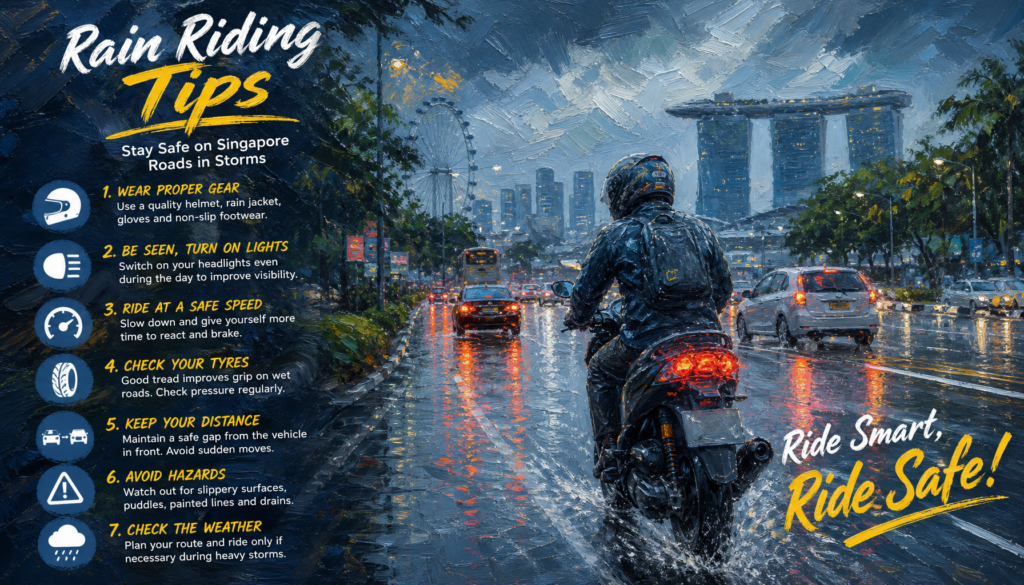
Rain Riding Tips: Stay Safe on Singapore Roads in Storms
Jul
Rain Riding Tips: Heavy downpours in Singapore can turn a daily ride into a slippery ordeal, making every commute unpredictable and risky. Rain riding tips are more important than ever as sudden storms could hit harder in 2026, catching even seasoned bikers and drivers off guard. With changing weather patterns, understanding how to stay safe on wet roads is not just wise, it could be lifesaving.
In this blog post, you’ll learn practical ways to protect yourself when rain pours without warning. We’ll share how to handle slippery surfaces, boost your visibility, and choose the right gear for stormy weather. You’ll also discover what to check before starting your journey and what to do if conditions suddenly worsen. Stay with us as we break down simple strategies to help you ride strong, stay dry, and stay safe when the next storm hits Singapore.
Stay Safe in Any Storm: Rain Riding Tips for Singapore Roads in 2026
Rain Riding Tips: Singapore’s unpredictable tropical climate means sudden downpours and thunderstorms are now an almost-daily event—especially with 2026 weather trends pointing to even heavier rainfall. For local riders, mastering rain riding tips isn’t just about comfort; it’s about survival on our busy streets. LTA statistics show a clear spike in rain-related accidents, much of it due to poor visibility and slick city surfaces. With our urban landscape—think HDB estates, PCN connectors, and major arterial roads—riding safely in storms requires special attention to Singapore’s unique hazards.
Frequent storms can obscure vision within seconds. That’s why it’s crucial to gear up in bright or reflective rain gear, and always ensure your headlights work properly—even during the day. Keeping your visor clear, by applying anti-fog treatment or cracking it slightly open, lets you see and be seen amid tropical showers. Remember: most rain accidents here happen because riders aren’t visible in time to motorists or pedestrians.
Rain Riding Tips: Singapore’s roads hold hidden risks the moment rain begins. Oil slicks—especially after dry spells—can turn quiet lanes or bus stop areas into skating rinks. Painted road markings and metal drain covers are notoriously slippery. Areas near traffic lights, bus stops, and HDB driveways see traction drop fastest, making it vital to ride cautiously and spot these hazards early.
Controlling your bike means more than slowing down. On wet roads, extend your following distance by at least two or three times the dry-weather norm, and brake earlier with gradual, smooth inputs. Avoid the temptation to accelerate hard off the line; smooth and gentle throttle control helps prevent wheel slip, which is a leading cause of falls in the rain.
Equipping yourself right pays off. Waterproof jackets, pants, and gloves with strong wet-weather grip help you stay in command, while tires with proper tread depth channel water away for better traction. For visor clarity, consider anti-fog inserts—critical in muggy Singapore downpours.
Ultimately, the best rain riding tip of all is knowing when not to ride. If visibility becomes dangerously low due to a flash flood, lightning, or heavy winds, don’t push on. Seek safe, sheltered areas—never expressway shoulders—to wait out the storm. Smart decisions keep you safe for the road ahead.
Quick Specs: Essential Gear & Equipment for Rain Riding in Singapore
| Gear/Equipment | Why It Matters for Rain Riding | Local Availability | Recommended Specs/Features |
|---|---|---|---|
| High-Visibility Rainwear | Bright or reflective rain jackets and pants make you much easier for other motorists to spot during heavy Singapore downpours, sharply reducing the risk of collision. | Readily found at major motorcycle shops and local gear outlets year-round. | Choose neon colours or with reflective stripes; waterproof construction is essential. |
| Waterproof Gloves | Gloves that remain grippy when wet help maintain throttle and brake control, addressing common traction loss in stormy conditions. | Available at all large motor accessory retailers in Singapore. | Look for non-slip palms and full waterproof lining. |
| Anti-Fog Visors/Inserts | Anti-fog coatings or inserts keep your helmet visor clear, preventing dangerous visibility loss that often occurs in local storms. | Stocked by helmet stores and some convenience kiosks near PCN (Park Connector Network) routes. | Apply anti-fog products or choose visors with built-in coatings. |
| Headlight Types | Ensuring properly functioning headlights, even during daytime rains, helps you “be seen”—a vital rain riding tip with Singapore’s sudden weather changes. | OEM replacements and LED upgrades available at workshops and accessories shops. | Opt for bright, white LED or halogen bulbs for maximum visibility. |
| Tire Tread Depth | Sufficient tread depth is critical for safe braking and water displacement on slick Singapore roads, especially near bus stops, traffic lights, or metal covers. | Many local workshops offer free tread depth checks with servicing. | Follow manufacturer’s minimum (often 1.6mm or more); replace tires early ahead of monsoon season. |
Rain Riding Tips: Outfitting yourself with the right rain gear is one of the most effective rain riding tips for Singapore roads. These essentials not only boost safety but also enhance confidence—plus, most are easily obtainable across the island, making them a wise investment for any rider planning to navigate our tropical storms in 2026.
See and Be Seen: Maximising Visibility in Singapore Downpours
Rain Riding Tips: When tropical downpours hit Singapore, visibility can plunge in seconds—making it vital to not only see but also be seen. Many accidents on wet roads stem from riders not being visible to motorists in time, so prioritising visibility could be your most important rain riding tip. Start by investing in high-visibility or reflective rain gear. Bright colours and retro-reflective strips catch the headlights of cars and buses during heavy rain, helping you stand out amid the grey conditions. This small step makes a huge difference, especially at dawn, dusk, or during torrential storms when LTA-compliant high-vis elements become even more crucial.
Rain Riding Tips: Next, always ride with your headlights switched on—even in the day. Singapore’s frequent downpours can make broad daylight look like late evening. A bright, consistent headlight beam increases the chances that other road users notice you early, which is particularly important around busy junctions or HDB estates where vehicles might emerge quickly. It’s a simple habit that aligns with responsible riding and heightens your safety even before the first raindrop falls.
Your visor is your window to the road, so keep it clear! Use anti-fog solutions or crack the visor very slightly to let airflow prevent condensation build-up. If your visor fogs mid-ride, your ability to react drops sharply—wiping it with a gloved hand is often ineffective in downpours. Proper maintenance or investing in an anti-fog insert ensures you always see hazards and signals, especially when rain is heaviest on key PCN routes or arterial roads.
Finally, ride where you’ll remain visible to motorists: avoid lingering in blind spots and position yourself so your lights and reflective gear are obvious. In Singapore’s urban traffic, staying clear of buses, lorries, and taxis’ blind spots is especially important in the rain. With these visibility-focused rain riding tips, you’re actively reducing the greatest risk on wet roads—not being seen in time.
Spot and Avoid: Navigating Singapore-Specific Road Hazards in Wet Weather
Rain Riding Tips: Wet weather riding in Singapore adds unique challenges due to our urban roadscape and tropical climate. If you’re navigating on two wheels, one of the top rain riding tips is recognising and steering clear of high-risk zones that become treacherous when wet.
After a dry spell, the first drops of rain often bring hidden hazards: oil slicks can suddenly surface on tarmac, especially near bus stops and intersections where vehicles idle the longest. These glossy patches are hard to spot, often forming subtle rainbow sheens—so approach such areas with extra caution, reduce your speed, and avoid abrupt steering adjustments. Painted road markings, including lane dividers and arrow glyphs, also transform into slippery traps under rain. Whenever possible, keep your tires off these markings during turns or braking, or attempt to cross them at as vertical an angle as you can for better traction.
Rain Riding Tips: Another hazard unique to Singapore’s cityscapes is metal drain covers and expansion joints. These are common along both major roads and residential HDB areas. In wet weather, metal becomes extremely slick compared to the surrounding asphalt. When you can’t avoid riding over them, do so in a straight line without braking or accelerating, keeping your bike steady and upright. Near traffic lights and bus stops, be extra alert as braking by buses and cars often leaves diesel or oil residue, amplifying slipperiness right where you might need to stop.
Adapt your lane position to local traffic: in wet conditions, keep more distance from large vehicles that can splash water and obscure both your vision and road hazards ahead. Singapore’s PCN (Park Connector Network) paths, while safe from most traffic, can accumulate puddles and algae during rains—slow down and look out for subtle greenish patches which indicate low grip. By mastering these spot-and-avoid strategies, you reduce risk and build the confidence to ride safely on Singapore roads, rain or shine.
Mastering Wet Weather Control: Braking and Throttle Techniques
Rain Riding Tips: In Singapore’s unpredictable weather, rain riding tips centre heavily on mastering wet weather control, especially during the morning rush or at busy town junctions. As soon as the rain starts, visibility is reduced and road surfaces become more hazardous—so adjusting your riding style is critical. Always increase your following distance by two to three times your usual gap, giving yourself more room to react in commuter-heavy traffic and busy intersections.
Braking technique makes a huge difference in wet conditions. Rather than grabbing the brakes suddenly, practice progressive braking: start gently, then squeeze more firmly as you feel for grip. This reduces the risk of skidding—especially on slippery paint markings, metal drain covers, or oil patches common after dry spells. Likewise, aim to avoid sudden throttle changes. Roll the throttle on and off as smoothly as possible; abrupt acceleration or deceleration can lead to wheel slip and a quick loss of traction.
Rain Riding Tips: Busy Singapore roads often mean unexpected stops or distractions from other vehicles. In the rain, keep your movements fluid and avoid quick swerves, as traction is far lower in places like bus stops and at traffic lights. Practising these techniques isn’t just about confidence—it’s about safety, especially when sharing space with buses and dense vehicle flows. On the Park Connector Network or smaller HDB roads, wet surfaces may also hide hazards like leaves or small debris, so maintaining maximum control through careful inputs is even more vital.
Ultimately, gentle and anticipatory control is the safest approach for rain riding in Singapore. By slowing down, keeping your buffer zone, and being mindful of progressive braking and smooth throttle use, you reduce your risk dramatically—even when others are making mistakes around you. Commitment to these basics is your best line of defence against the unexpected downpours of 2026. Ride smooth, ride safe, and always adapt to the wet road beneath your wheels.
When to Park It: Making Safe Decisions During Singapore Storms
Rain Riding Tips: Knowing when to park your bike during a Singapore storm is just as important as mastering rain riding tips. Local weather can change rapidly—clear skies often give way to heavy downpours, flash floods, or sudden lightning. Always check updated NEA weather alerts before heading out, and keep an eye on the sky for fast-approaching dark clouds or thunder. These cues signal it may be time to consider stopping, especially if visibility drops or wind speeds pick up.
If you’re already on the road and a storm rolls in, play it safe. Do not risk riding through extremely poor visibility, lightning, or flooded stretches. Instead, look out for sheltered, LTA-approved stopping points—these include HDB void decks, covered linkways, or petrol station rooftops. While it might be tempting in an emergency, avoid parking on expressway shoulders unless absolutely necessary, as this exposes you to more dangers from passing vehicles and lightning strikes.
Rain Riding Tips: Lightning is a real risk in tropical storms. Singapore averages among the world’s highest lightning densities. If you hear thunder and see lightning, find shelter quickly and wait till at least 30 minutes after the last thunderclap before resuming your ride. Riding through standing water is not just uncomfortable—it can hide potholes, and cause loss of control or even engine failure if water enters the mechanics.
Practising good judgment—knowing when not to ride—is a sign of a responsible, prepared rider. Parking and waiting out unsafe conditions keeps you safe and protects your bike. Prioritising safety means you’ll ride another day, instead of risking a crash or costly repairs. Always remember that no errand is worth compromising your well-being. Responsible rain riding tips aren’t just about handling your machine—they’re about respecting Singapore’s unpredictable weather and knowing when it’s time to pause.
Rain Riding Tips vs. Dry Weather Tricks: What Really Changes?
Rain Riding Tips: Understanding how rain riding tips differ from dry weather techniques is crucial for safe travel on Singapore’s unpredictable roads. While both scenarios demand alertness, wet conditions require you to completely rethink your habits. For instance, in dry conditions, wearing light-coloured clothes or standard riding jackets may suffice, but as soon as the skies open up, high-visibility rain gear or reflective jackets become essential so other motorists can spot you during sudden downpours. Don’t forget—in Singapore, most rain-related accidents occur because riders aren’t seen in time.
The character of the road itself changes dramatically in the rain. In dry weather, riders may only need to watch for loose debris, but after a tropical shower, unique hazards emerge: oil slicks lift during the first rain, painted lines and metal features like drain covers become extremely slippery, and areas near bus stops or traffic lights can be treacherous. Traction isn’t just reduced; it becomes unpredictable, so riders must pick their lines with even more care and avoid rapid maneuvers.
Rain Riding Tips: Braking and throttle management also require a total mindset shift. The rule in sunny weather is to be smooth, but in wet conditions, it’s critical. Always increase your following distance by two or three times, and brake progressively rather than suddenly—abrupt actions can easily lead to loss of control when surfaces are slick. Smooth, gradual throttle input helps prevent wheel slip, underscoring why “control over speed” is the gold standard for rainy Singapore rides.
Proper gear takes on new importance, too. While you might get by with regular gloves or minimal rain protection in a drizzle, heavy rain absolutely demands waterproof jackets, pants, and grippy gloves. Don’t overlook tire condition either—adequate tread depth isn’t just about legal compliance; it’s your first line of defense against aquaplaning. Anti-fog visor treatments or a slightly open visor help you maintain vision when humidity spikes.
Sometimes, the smartest decision is simply to wait out the storm. Singapore’s rains can bring flash floods, blinding sheets of water, and high winds. If visibility drops, pull over in a safe, sheltered area—not on an expressway shoulder. Recognising the limits of both skill and environment is a vital part of adopting the right rain riding tips for local conditions.
Frequently Asked Questions
Is rain riding allowed on all Singapore roads or are there exemptions?
Yes, rain riding is allowed on all public roads in Singapore, but safety is paramount. Riders are advised to avoid expressways or high-traffic areas during severe storms or when visibility drops critically low, as outlined in common rain riding tips. Always check the latest LTA advisories for weather-related road warnings before you set off.
Can I store wet rain gear in my HDB?
Storing your wet rain gear in your HDB flat is generally permissible, but it’s best to hang items in well-ventilated spaces to prevent mould and dampness. Using closed balconies or bathrooms can help contain excess moisture, protecting both your equipment and your living environment.
What’s the best anti-fog solution for Singapore humidity?
Singapore’s high humidity makes anti-fog visor solutions essential. Apply dedicated anti-fog inserts or anti-fog sprays for your visor, or slightly crack it open when riding to improve airflow. This is a key rain riding tip to maintain clear visibility in the tropics.
How to safely cross slippery markings or drain covers?
When approaching road markings or metal drain covers in the rain, reduce speed and cross over them as upright and smoothly as possible. Avoid sudden braking or leaning while on these surfaces, since traction is much lower when wet in these spots.
Are there LTA-approved high-visibility rain jackets?
There are no mandatory LTA-approved rain jacket brands, but riders are strongly urged to wear high-visibility or reflective rain gear for better safety. Bright colors or reflective materials make you much more visible to other road users during tropical downpours, supporting the “See and Be Seen” principle in local rain riding tips.
Should You Ride in the Rain? Our Verdict & Next Steps for Singapore Riders
Rain Riding Tips: Deciding whether to brave Singapore’s downpours on two wheels is a skill every rider must develop. Rain riding tips start with knowing your limits and the unique local risks. If visibility falls sharply, heavy rain obscures lane markings, or you notice lightning in the distance, the safest choice may be to delay your ride or pull into a sheltered area—just not on expressway shoulders, as this is unsafe and prohibited by LTA regulations. Sudden storms in 2026 could also bring flash floods; if you see rising water near bus stops or underpasses, it’s best to find a safe spot to wait it out.
That said, not every rainy situation is off-limits. If rain is moderate and you’re properly equipped—with waterproof gear, gloves that grip well when wet, and working headlights—riding can still be safe and manageable. Always pay special attention to slippery spots such as painted markings, metal covers, and areas near traffic lights. Smooth, deliberate throttle and brake inputs add an extra level of control, which is far more important in the wet than raw speed.
Our verdict? When in doubt, put safety first and avoid riding during a storm’s peak. But with vigilant gear checks, maintained tire tread, and steady control, you can reduce your risk and make wet-weather riding feasible. As we head further into 2026, stay proactive—review your rain gear, practice braking smoothly on quiet roads when it’s wet, and don’t hesitate to pull over if conditions worsen.
Most importantly, share these rain riding tips with your fellow Singapore riders. The more prepared we are as a community, the safer our commutes become. A confident, well-equipped rider makes smart choices on Singapore roads, rain or shine.
We at Speedzone specialize in offering top-quality servicing for a variety of premium motorcycle brands. Whether you ride a Yamaha, Honda, KTM, Suzuki, Kawasaki, SYM, Aprilia, Piaggio, or Mutt Motorcycle, you can trust us to keep your ride running smoothly.
Book Your Service Today
Ready to give your motorcycle the care it deserves? Or just curious to know more? With our premium motorcycle accessories available catering to every motorbike models. Book your motorcycle servicing with us or drop by our showroom today and experience the difference of expert servicing tailored to your brand and friendly staffs!
