
Expressway Riding Tips
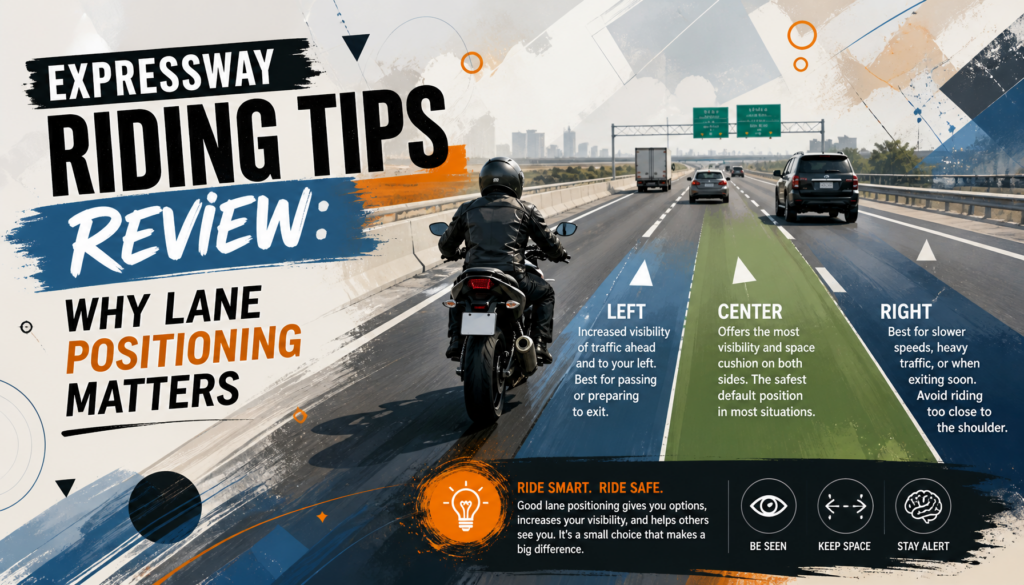
Expressway Riding Tips Review: Why Lane Positioning Matters
Jul
Expressway Riding Tips Review: Lane positioning can make a world of difference when riding on expressways. Many motorcycle riders underestimate the importance of choosing the right lane position, often leading to unsafe situations and unnecessary anxiety. Did you know that proper lane positioning can enhance visibility and improve your reaction time?
This post will explore essential expressway riding tips, focusing on how lane positioning plays a critical role in your safety. You’ll learn practical strategies to maximize your control and comfort while riding at high speeds. By understanding the dynamics of lane positioning, you can significantly reduce risks and enjoy a more confident riding experience. Let’s dive into the key factors that influence lane positioning and discover how to ride safely on the expressway.
Expressway Riding Tips: Why Lane Positioning Matters
Expressway Riding Tips Review: For beginner riders, expressway riding tips are essential for developing the skills and confidence needed on high-speed roads. One of the most critical aspects to master is merging. Many new riders are eager to accelerate, but before you speed up, it’s crucial to learn how to merge confidently. This involves judging traffic gaps, swiftly checking blind spots, and matching the flow of traffic to ensure a safe entry onto the expressway.
Another vital tip focuses on lane positioning. Visibility is key on expressways, and riders should avoid positioning themselves in vehicle blind spots. By mastering lane positioning, you improve not only your visibility but also your escape routes in case of sudden traffic changes. It’s important to ride assertively without lingering in risky zones.
Expressway Riding Tips Review: Additionally, be aware of the impact of wind fatigue. As a beginner, you may find it surprising how exhausting the pressure of sustained wind can become at highway speeds. To counteract this fatigue, practice maintaining proper posture and a relaxed grip on the handlebars, and consider wearing wind-resistant gear. These will contribute to a more enjoyable and less tiring riding experience.
Moreover, always keep an eye on the flow of traffic ahead, rather than solely on the vehicle directly in front of you. By scanning multiple vehicles ahead, you can spot potential hazards—like brake lights, lane changes, or upcoming congestion—earlier, allowing you more time to react smoothly.
Finally, understanding emergency situations on the expressway is crucial. Conditions like hard braking, tire punctures, or sudden weather changes can be much more hazardous at high speeds. Beginners should realize that stopping distances increase dramatically and that smooth, controlled reactions will be far safer than panicked ones. With these expressway riding tips, you’ll be better prepared for the challenges of high-speed riding.
Master Merging Before Speeding Up
Expressway Riding Tips Review: When it comes to expressway riding, mastering merging is essential before accelerating your speed. Many beginners tend to prioritize speed, but understanding the nuances of merging is critical for safe riding. This is where the main focus should be: traffic gap judgment.
To begin, recognizing the right moment to merge into traffic requires a keen sense of the gaps available in other lanes. Be sure to observe the speed of vehicles around you; you should aim to match their speed to ensure a smooth entry into the flow of traffic. Blind spot checks are equally crucial—make it a habit to glance over your shoulder before changing lanes, no matter how confident you feel.
Expressway Riding Tips Review: Another vital technique is maintaining traffic flow. Avoid abrupt lane changes or last-minute merges, as these can confuse both you and other drivers on the expressway. Instead, plan your maneuvers well in advance and signal your intentions clearly to communicate with those around you.
Riders should also practice merging from various lane positions, whether entering from a highway ramp or switching lanes while on the expressway. Each scenario can present different challenges, so experience in several situations will build your confidence. Add to that the emphasis on relaxation while riding; gripping the handlebars too tightly can lead to fatigue and impair your decision-making ability.
In summary, safely merging onto the expressway not only improves your riding skills but also enhances your confidence. By prioritizing gap judgments, conducting blind spot checks, and maintaining consistent traffic flow, you’ll find that safe riding comes naturally, allowing you to enjoy the thrilling experience of being on the expressway.
Lane Positioning Changes Everything
Expressway Riding Tips Review: Proper lane positioning is crucial for enhancing safety while riding on expressways. As beginners, it may be easy to overlook this aspect, but understanding its importance can significantly impact visibility and overall riding experience. By selecting the right lane position, riders can increase their visibility to other drivers, thereby reducing the chances of accidents caused by blind spots.
One of the key elements of lane positioning is to avoid lingering in the blind spots of larger vehicles. Staying in a position where you are easily visible not only helps you be seen, but it also provides better escape routes if needed. Riders should aim to occupy the left third of the lane when riding in traffic. This positioning allows for a clear view of both the road ahead and traffic approaching from behind. It also provides room to maneuver if a vehicle suddenly obstructs your path.
Expressway Riding Tips Review: Furthermore, proper lane positioning enhances reaction time during sudden traffic changes. If you are riding in a position that gives you a clear view of several vehicles ahead, you will be more aware of potential hazards, such as cars braking suddenly or changing lanes. This foresight allows you to react more smoothly and with greater control, rather than relying solely on instinct to deal with unexpected situations.
Ultimately, mastering proper lane positioning will contribute to a safer riding experience on expressways. As you practice, focus on maintaining a position that maximizes your visibility while also allowing for quick escape routes. This skill not only reinforces your confidence as a rider but also helps in ensuring you arrive safely at your destination.
Wind Fatigue Is Real
Expressway Riding Tips Review: When it comes to expressway riding, one of the most surprising challenges that new riders encounter is the impact of wind resistance, which can significantly contribute to fatigue. At highway speeds, the pressure from the wind can be relentless, making long rides exhausting if not managed properly.
To combat wind fatigue, it’s essential to employ proper posture while riding. Maintaining a relaxed grip on the handlebars and a slight lean can help reduce wind drag. Additionally, wearing wind-resistant gear can make a noticeable difference. Investing in high-quality jackets with proper aerodynamics can shield you from relentless winds, allowing you to ride comfortably for longer periods.
Expressway Riding Tips Review: Furthermore, choosing the right lane positioning can also mitigate wind resistance. By staying towards the left or right of your lane, you can minimize direct wind exposure compared to riding in the center. This subtle adjustment can change your experience dramatically. Always remember, staying visible is critical on expressways and proper lane positioning helps with that.
It’s also worth noting that most beginners don’t realize how long it takes to recover from wind fatigue during a long ride. Thus, planning your stops during expressway rides becomes crucial. Short breaks will not only help you refresh but also reduce the accumulated effects of wind resistance on your body.
By focusing on posture, gear, and lane positioning, you can significantly decrease wind fatigue and enhance your overall riding experience. Embrace these tips to make your expressway journeys not only safer but also more enjoyable. Remember, managing fatigue effectively is key to becoming a more confident and skilled rider.
Reading Traffic Far Ahead Matters More Than Nearby Vehicles
Expressway Riding Tips Review: When it comes to Expressway Riding Tips, mastering the ability to read traffic far ahead is crucial for maintaining safety at high speeds. Many beginner riders make the mistake of concentrating solely on the vehicle that is right in front of them. While this may seem logical, it can lead to critical oversights that compromise safety. Scanning the road multiple vehicles ahead helps to anticipate potential hazards before they become immediate threats.
Effective scanning allows riders to detect signs of trouble early, such as brake lights illuminating in the distance, vehicles changing lanes unpredictably, or emerging congestion. By being alert to these signs, you can initiate adjustments like slowing down or changing lanes well in advance. This proactive approach provides you with more time to react, which is especially important given the heightened dangers of expressway riding.
Expressway Riding Tips Review: Moreover, understanding the behavior of cars further along your path provides insight into how traffic dynamics are shifting. Are brake lights flickering on multiple cars? That’s a clear indication to begin decelerating. Are cars merging or switching lanes? This could require you to maneuver as well. By expanding your focus to include a broader sweep of traffic, you’re not only riding defensively but also enhancing your overall situational awareness.
In the fast-paced environment of expressways, small decisions can have significant impacts. The more you scan ahead, the more prepared you’ll be for unexpected changes. This strategy not only improves your reaction time but can also alleviate the stress that often accompanies high-speed riding.
Therefore, invest time in honing this skill—it’s one of the best ways to enhance your confidence and safety on the road. By practicing your focus on distant traffic, you’ll become a more competent and responsible rider ready to tackle all the challenges that expressway riding presents.
Emergency Situations Feel Different at High Speed
Expressway Riding Tips Review: Riding on expressways can be exhilarating, but it also introduces unique challenges, particularly in emergency situations. When speed increases, the stakes do too, and even small mistakes can lead to significant consequences. Emergency situations feel different at high speed because the dynamics of riding change dramatically, necessitating an understanding of how best to react.
For beginners, it’s crucial to grasp that maneuvers such as hard braking, encountering tire punctures, or reacting to debris become far more perilous when riding at expressway speeds. The stopping distance increases dramatically; what feels like a brief moment can turn into a critical situation if mismanaged. This is why developing smooth, controlled reactions is paramount.
Expressway Riding Tips Review: To prepare for potential emergencies on the expressway, learn to maintain a calm demeanor and practice your response to various scenarios. For instance, rather than tensing up and pulling hard on the brakes, try to stay relaxed and use a gradual braking technique. This smoothing of inputs can significantly enhance your ability to maintain control of your motorcycle and react appropriately to sudden changes in traffic or road conditions.
Additionally, understanding the importance of lane positioning can play a vital role in how you manage emergencies. Staying visible and avoiding blind spots can help ensure that you are able to react faster to what’s happening around you. Moreover, by reading traffic far ahead instead of just focusing on the cars directly in front of you, you equip yourself with the foresight to respond long before a situation escalates.
Ultimately, recognizing how different high-speed travel can be ensures that you’ll be better prepared to handle emergencies should they arise. By practicing these expressway riding tips, you’ll significantly boost your confidence and safety on the road, allowing you to enjoy the ride with peace of mind.
Quick Specs: Expressway Riding Techniques
| Technique | Description |
|---|---|
| Master Merging Before Speeding Up | Confident merging is crucial for safe expressway riding. Focus on judging traffic gaps, checking blind spots, and matching traffic flow before prioritizing speed. |
| Lane Positioning Changes Everything | Proper lane positioning enhances visibility and escape routes. Avoid lingering in blind spots to improve reaction times during sudden traffic changes. |
| Wind Fatigue Is Real | Long rides at highway speeds can be tiring due to wind pressure. Use proper posture, a relaxed grip, and invest in wind-resistant gear to minimize fatigue. |
| Reading Traffic Far Ahead Matters | Scan several vehicles ahead instead of just the one in front. Early detection of brake lights and lane changes enhances your ability to react smoothly. |
| Emergency Situations Feel Different at High Speed | Understand that stopping distances increase at high speeds. React smoothly to emergencies rather than panicking to ensure safety. |
Frequently Asked Questions
What should I prioritize when merging onto the expressway?
When merging, focus on mastering the technique rather than just accelerating. Ensure you can judge traffic gaps effectively, check your blind spots quickly, and match the speed of traffic seamlessly. This will help you merge safely and confidently without rushing.
Why is lane positioning important for safety?
Lane positioning enhances your visibility and reaction time on expressways. By avoiding vehicle blind spots and positioning yourself strategically, you can ensure that you’re seen by other drivers, providing you with better escape routes and time to react to sudden changes in traffic.
How can I reduce wind fatigue on long rides?
Wind fatigue can be quite draining at highway speeds. To combat this, adopt a proper posture, maintain a relaxed grip on the handlebars, and invest in wind-resistant riding gear. These adjustments can make extended expressway rides significantly more comfortable.
What should I be watching for while riding?
It’s crucial to scan traffic several vehicles ahead instead of focusing solely on the car directly in front of you. By spotting brake lights, potential lane changes, or congestion early on, you’ll give yourself ample time to react appropriately, enhancing your safety on the expressway.
How should I handle emergencies at high speeds?
Understand that emergency situations, such as hard braking or sudden debris, feel markedly different when you’re traveling at high speeds. Recognize how stopping distances are greatly increased and practice smooth inputs to avoid panicked reactions that could compromise your safety.
Should You Buy Into These Expressway Riding Techniques?
Expressway Riding Tips Review: When considering whether to adopt Expressway Riding Tips, the benefits these techniques offer are substantial for both safety and confidence. For beginners especially, mastering these essential skills can mean the difference between a relaxed riding experience and a stressful, anxiety-ridden one.
An important starting point is mastering merging techniques. Many new riders mistakenly rush to accelerate, forgetting that the key to safe riding is understanding how to seamlessly integrate into highway traffic. This includes accurately judging traffic gaps, efficiently checking blind spots, and matching your speed to the flow. These practices build a solid foundation for any expressway journey.
Another critical component is lane positioning. Staying visible on the road is paramount; thus, it’s essential to avoid lingering in a vehicle’s blind spot. Proper lane positioning not only enhances your visibility but also provides vital escape routes and improves reaction times during unexpected traffic changes.
Expressway Riding Tips Review: Beginners should not underestimate the effects of wind fatigue, which can surprise even seasoned riders. The continuous pressure from the wind at highway speeds can lead to tiring rides. To combat this, riders should adopt proper posture, maintain a relaxed grip, and consider investing in wind-resistant gear. These small adjustments can significantly ease the burden of long-distance travel.
Moreover, effective riders are those who read traffic conditions far ahead rather than just what’s directly in front of them. By scanning several vehicles ahead, you can anticipate potential hazards such as brake lights or sudden lane changes, giving you additional time to respond appropriately.
Lastly, it’s vital to understand that emergencies manifest differently at high speeds. Hard braking, reacting to debris, or even sudden rain can be much more perilous. Beginners must realize that stopping distances can increase dramatically on expressways, making smooth inputs essential for safety rather than panicked reactions.
As you consider adopting these Expressway Riding Tips, remember that practice is essential. Regularly applying these techniques will greatly enhance your riding experience and overall safety on the expressway. Invest time in mastering them to boost your confidence and secure more enjoyable rides.
We at Speedzone specialize in offering top-quality servicing for a variety of premium motorcycle brands. Whether you ride a Yamaha, Honda, KTM, Suzuki, Kawasaki, SYM, Aprilia, Piaggio, or Mutt Motorcycle, you can trust us to keep your ride running smoothly.
Book Your Service Today
Ready to give your motorcycle the care it deserves? Or just curious to know more? With our premium motorcycle accessories available catering to every motorbike models. Book your motorcycle servicing with us or drop by our showroom today and experience the difference of expert servicing tailored to your brand and friendly staffs!
