
Singapore COE, COE
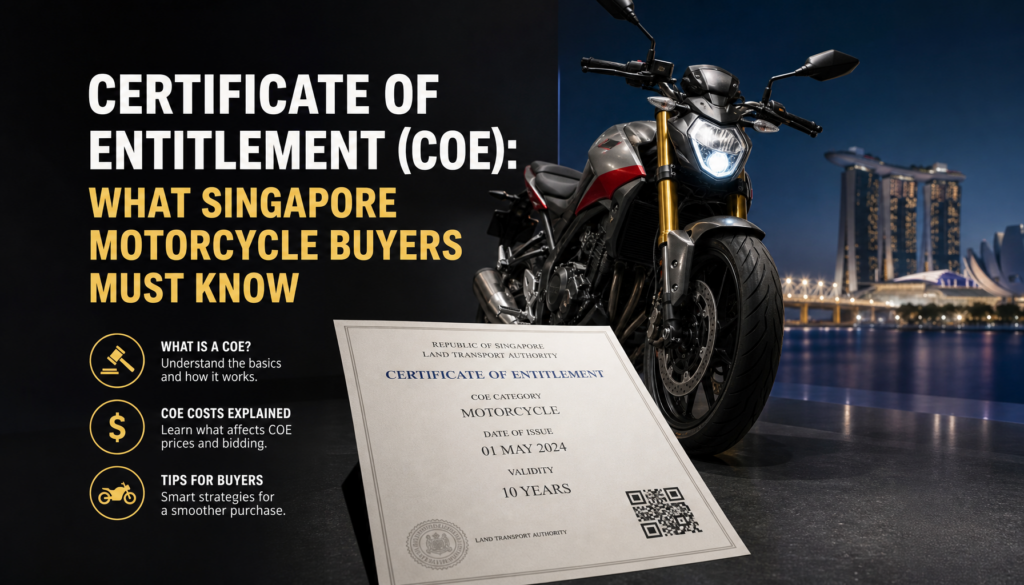
Certificate of Entitlement (COE): What Singapore Motorcycle Buyers Must Know
Jun
Certificate of Entitlement (COE): Stuck in long motorcycle queues at the LTA office or shocked by soaring bike prices? The Certificate of Entitlement (COE) can make or break your dream of cruising on Singapore’s roads. Getting a motorbike here isn’t just about picking a cool model. You also need to tackle the COE system, which has unique rules, high costs, and tough competition.
This article explores what every motorcycle buyer must know about the COE, from the basics to the latest updates for 2026. We’ll guide you through how COE premiums work, what to expect during open bidding, and why prices keep changing. You’ll learn essential tips to save money and make smart choices before heading to a dealership. By the end, you’ll feel ready to navigate Singapore’s motorcycle COE process with confidence.
COE Demystified: What Singapore Motorcycle Buyers Need to Know
Certificate of Entitlement (COE): The Certificate of Entitlement (COE) plays a pivotal role in every Singaporean motorcycle purchase. Unlike simply buying a bike, you’re actually bidding for the legal right to own and ride your vehicle on Singapore roads for ten years. Issued by the Land Transport Authority (LTA), this certificate secures your place in the limited pool of motorcycles allowed on the nation’s roads. Remember, the COE is not the bike itself—it’s a legal permit. When you make payment, a significant part of the total cost goes to the COE, sometimes more than the machine price, especially for popular models like the Yamaha Y15ZR.
For motorcycles, the COE falls under Category D, which is separate from cars and commercial vehicles. This means that fluctuations in car or commercial COE categories don’t directly impact motorcycle rates. However, motorcycle COE prices are driven by demand from fellow riders. If you notice market spikes or dips during bidding exercises, it’s due to changes in quota release and the number of buyers vying for a permit.
Certificate of Entitlement (COE): The COE is awarded via a competitive bidding system, held twice a month. Staying updated on bidding trends can be useful—entering the market during a low-demand period could save you thousands. However, predicting winning bids isn’t an exact science, so flexibility and vigilance are required.
It’s essential to factor in the total cost of ownership. COE is just one component; costs like Additional Registration Fee (ARF), insurance, road tax, and dealer margins all add up. This is especially notable for lower-capacity motorcycles, where the COE can sometimes exceed the bike’s retail price. Understanding this breakdown helps you budget realistically before committing.
When the 10-year COE expires, you face a choice: renew by paying the Prevailing Quota Premium (PQP) for another five or ten years, or deregister and relinquish your right to the vehicle. Resale value and maintenance condition matter more as a bike ages, making timely renewal or replacement a savvy consideration for many Singaporean riders. Getting familiar with the Certificate of Entitlement now helps you make informed decisions down the road.
COE Category D: How Motorcycles Are Classified and Priced in Singapore
Certificate of Entitlement (COE): When purchasing a motorcycle in Singapore, understanding COE Category D is essential. Certificate of Entitlement (COE) for motorcycles falls exclusively under Category D, which is distinct from the COE categories for cars (A and B) and commercial vehicles (C and E). This separation means that motorcycles aren’t competing with cars for the same quota, and the bidding process is shaped primarily by the demand from riders and the limited number of slots the LTA allocates specifically for two-wheelers.
Unlike car buyers who might be influenced by broader economic factors, the Category D COE is directly affected by trends within Singapore’s motorcycle community. If more people seek riding as an affordable transport solution or delivery services experience a surge in hiring, COE premiums for motorcycles can spike rapidly. Monitoring recent auctions is useful—you can see sharp fluctuations in Category D prices when demand rises or when the LTA adjusts quotas, sometimes leading to record-high premiums.
Certificate of Entitlement (COE): The competitive bidding system for Category D takes place twice a month. Prior to each exercise, LTA announces the number of COEs (quota) available for motorbikes. If more bidders chase fewer available COEs, premiums climb. Conversely, a larger quota or softer demand can help prices ease. This makes the timing of your purchase important. Staying updated on current tenders helps you assess when to enter the market, potentially saving you thousands of dollars on your motorcycle’s final price tag.
It’s vital for Singapore motorcycle buyers to budget beyond just the sticker price. Since the COE may sometimes cost more than popular models themselves, such as the Yamaha Y15ZR, knowing how Category D works is key. Whether you’re eyeing your first bike or planning a COE renewal, understanding these mechanics—and tracking trends—will give you the knowledge to make the most cost-effective decisions.
Quick Specs: The Cost Components of Motorcycle Ownership at a Glance
| Cost Component | Description | Typical Range (SGD) | Remarks |
|---|---|---|---|
| COE (Category D) | Right to own/use a motorcycle for 10 years | Varies (can exceed $10,000 for popular classes) | May exceed actual motorcycle value for low-capacity models |
| Additional Registration Fee (ARF) | Tax based on bike’s Open Market Value (OMV) | Typically around $500–$2,000 | Impacts upfront ownership cost |
| Insurance | Mandatory third-party (or comprehensive) cover | From $150–$500 annually | Varies by age, experience, and bike type |
| Road Tax | Annual tax based on engine capacity | $54–$700 annually | Smaller bikes have lower rates |
| Dealer Margins | Mark-up included in final bike price | Varies | Differs between authorised dealers & resellers |
| Sample Base Model Price (e.g. Yamaha Y15ZR) | Purchase price for a popular commuter model | ~$8,000–$10,000 | Base price often matched or exceeded by COE |
Certificate of Entitlement (COE): Understanding all these cost components is essential for Singapore motorcycle buyers. The Certificate of Entitlement (COE) can unexpectedly be the priciest item, sometimes even doubling the outlay for mass-market models like the Yamaha Y15ZR. Factoring in ARF, insurance, road tax, and dealer margins ensures you have a realistic view of the total commitment before making a decision. This comprehensive cost table should help you plan wisely and approach bidding or dealer negotiations with confidence.
Navigating COE Bidding: How Singapore’s System Works and Why Prices Fluctuate
Certificate of Entitlement (COE): Understanding how to navigate Singapore’s Certificate of Entitlement (COE) bidding system is key for any motorcycle buyer aiming to get the best value. The Land Transport Authority holds COE bidding exercises twice a month, releasing a limited quota for Category D, which is reserved for motorcycles. The number of COEs available in each cycle can change based on overall deregistrations and policy adjustments, directly impacting how much you’ll need to bid.
When it comes to COE bidding, demand from riders plays the largest role in setting prices. If many people are aiming to purchase bikes at the same time—such as right before festive seasons or when new popular models hit the market—bidding prices can spike. Conversely, during periods of lower demand or higher quota release, there’s a higher chance for the COE price to drop, allowing buyers to secure better deals. Monitoring recent COE results on LTA’s website or reputable dealer platforms is essential if you want to time your purchase well.
Certificate of Entitlement (COE): Bidding can feel intimidating, but patience pays off. Some experienced buyers track bidding cycles for several months before making their move, waiting for a stable or declining trend in prices. Since COE is a significant proportion of your total expenditure—sometimes more than the cost of popular models like the Yamaha Y15ZR—it’s vital to avoid emotional bidding. Setting a clear budget ceiling before entering the process helps you avoid overextending your finances.
For those who want to sidestep some uncertainty, many authorised dealers offer packages that include COE, insulating buyers from extreme price fluctuations. While this may come at a slight premium, it can provide peace of mind—especially for first-timers. Ultimately, understanding the COE mechanism, keeping an eye on market trends, and weighing your personal risk tolerance can help you make a smarter and more confident decision when bidding for your next motorcycle in Singapore.
Renew or Deregister? COE Expiry Decisions for Singaporean Riders
Certificate of Entitlement (COE): When your motorcycle’s Certificate of Entitlement (COE) hits the 10-year mark, Singaporean riders face a major decision: renew the COE or deregister the bike. Renewing the COE allows you to keep your beloved motorcycle on the road by paying the Prevailing Quota Premium (PQP)—either for another 5 or 10 years. This option is attractive if your bike is still in good condition and sentimental value matters. However, you’ll need to weigh ongoing maintenance costs, as older bikes may require more frequent repairs and parts replacement. A thorough mechanical check is essential before making this commitment.
Some riders may find that their motorcycle’s resale value at the 10-year mark is limited, especially for lower-capacity models where the COE has made up a larger portion of the purchase price. In this scenario, renewing the COE may not be cost-effective. Additionally, the market for secondhand bikes is influenced by changing regulations and evolving rider preferences. If your motorcycle is heavily worn or the cost to restore and maintain it is too high, deregistering and exploring newer models might be wiser. Upon deregistration, you must return the vehicle to an LTA-approved scrapyard, and you may qualify for rebates if your COE is still valid.
Certificate of Entitlement (COE): It’s also worth considering local storage limitations—HDB parking permits and space can impact whether keeping an older motorcycle is practical. Plus, renewing your COE means locking in a new PQP, which is subject to fluctuations based on recent bidding exercise outcomes. Monitoring these trends gives you greater control over your total cost of ownership.
Ultimately, understanding what the COE represents—a right to use the bike, not ownership of the machine itself—helps frame this decision logically. Whether you renew or deregister, always factor in ongoing costs, resale prospects, and how much you still enjoy riding your current motorcycle under Singapore’s unique Certificate of Entitlement system.
Singapore-Specific Buyer Concerns: How COE Affects Young Riders and Budget Choices
Certificate of Entitlement (COE): Many young riders and first-time buyers in Singapore are surprised when they discover that the Certificate of Entitlement (COE) can be more expensive than the motorcycle itself—especially for entry-level models like the Yamaha Y15ZR. In fact, the COE is not the motorcycle; it’s the permit issued by the Land Transport Authority (LTA) that allows you to own and use your bike on Singapore roads for 10 years. Understanding this distinction is crucial for anyone planning a purchase, as the actual machine might cost less than half of your total outlay.
For budget-conscious buyers, COE’s impact on affordability is significant. Bikes popular with younger riders often fall within lower engine capacities—yet, if COE prices are high at the time of bidding, a brand-new affordable model may suddenly become out of reach. As COE for motorcycles (Category D) moves independently from car COEs, price spikes are driven by fluctuations in supply and demand, not by the popularity of specific brands. This means that even tried-and-tested budget bikes can periodically become expensive, depending solely on COE trends.
Certificate of Entitlement (COE): Timing plays a huge role—because COE bidding happens twice a month, keeping an eye on recent bid trends helps you plan your purchase window. For instance, waiting for a dip in COE prices could save you thousands. It’s common for budget-focused Singapore riders to track online forums, LTA bulletins, or talk to dealers about upcoming quota releases before making a decision. This patience and planning can help you secure a better deal and avoid overpaying for your Certificate of Entitlement.
Finally, remember that COE isn’t the only cost. You’ll need to budget for the Additional Registration Fee (ARF), road tax, insurance, and dealer fees on top. For younger buyers, it might make sense to consider the COE renewal route for a used bike—paying only the Prevailing Quota Premium (PQP) for another 5 or 10 years—though bear in mind, older bikes may require more maintenance. Weighing these choices carefully will help you balance your budget and get the most out of Singapore’s motorcycling landscape.
Frequently Asked Questions
Is my Certificate of Entitlement (COE) transferable if I sell my motorcycle?
No, the COE is not transferable between motorcycles or owners. When you sell your motorcycle, the COE remains attached to that specific vehicle and is not transferable to another bike or buyer. If you wish to own another motorcycle, you will need to secure a new COE for your next purchase.
What happens if I sell my motorcycle before the COE expires?
If you sell your motorcycle before the COE expiry, the remaining validity of the COE stays with the motorcycle for the new owner. You may be eligible for a COE rebate if the vehicle is deregistered before the COE term ends, but selling the bike itself does not provide a refund on the COE.
Can COE prices drop or become more affordable in future bidding exercises?
Yes, COE prices can drop or rise depending on demand and supply factors set by the Land Transport Authority. Regular monitoring of bidding results and market trends can help buyers potentially enter when prices are lower, though timing is never guaranteed due to market variability.
Is there a best time of year to bid for a motorcycle COE?
There is no fixed ‘best’ time of year, as COE bidding occurs twice a month and prices reflect immediate market sentiment. However, observing recent trends and periods of low demand may offer some buyers an advantage in securing a lower premium.
How does the COE affect my insurance and road tax costs?
The COE itself does not affect insurance or road tax, but it does contribute significantly to your total cost of ownership. Insurance premiums are determined by your profile and motorcycle type, while road tax is based on engine capacity. Factoring in COE, insurance, road tax, and other fees is crucial for Singapore buyers planning their overall budget.
Should You Buy a Motorcycle in 2026? Our COE Verdict for Singapore Riders
Certificate of Entitlement (COE): Thinking about buying a motorcycle in Singapore in 2026? Navigating the Certificate of Entitlement (COE) landscape presents both opportunities and challenges for local riders. On the upside, a motorcycle provides unmatched convenience on Singapore’s roads and more affordable mobility than a car. With motorcycles being classified under Category D COE, prices are largely influenced by fellow motorcycle buyers, which can mean a more level playing field compared to the volatility often seen in car COE categories.
However, prospective buyers need to be aware that a significant portion of a motorcycle’s price isn’t for the bike itself—it’s the COE, which only grants you the right to use the vehicle for ten years. Periodic bidding can lead to unpredictable costs, especially when demand spikes or the quota tightens. Watching the COE bidding trends and planning your purchase timing is crucial to avoid overpaying.
Certificate of Entitlement (COE): Beyond the COE price, make sure to budget for other recurring expenses such as Additional Registration Fee (ARF), insurance, and road tax. For lower-capacity models, the COE can sometimes exceed the cost of the machine itself, as seen with popular choices like the Yamaha Y15ZR. For HDB dwellers, also consider the cost of overnight parking and the practicality of HDB-compliant motorcycle storage.
If you’re holding onto your bike as your COE nears the 10-year mark, evaluate whether renewing the COE (by paying the Prevailing Quota Premium) is better than deregistering. Renewal can be a savvy move if your bike is in top condition and still meets your daily needs, but also factor in its future resale value and ongoing maintenance demands.
Our verdict: buying a motorcycle in 2026 can still make sense, especially for savvy, trend-watching riders focused on value and convenience. Monitor COE prices, compare total ownership costs, and weigh renewal options carefully. Ready for your next ride? Start budgeting now and stay tuned to LTA updates to make the smartest move with your Certificate of Entitlement in Singapore.
We at Speedzone specialize in offering top-quality servicing for a variety of premium motorcycle brands. Whether you ride a Yamaha, Honda, KTM, Suzuki, Kawasaki, SYM, Aprilia, Piaggio, or Mutt Motorcycle, you can trust us to keep your ride running smoothly.
Book Your Service Today
Ready to give your motorcycle the care it deserves? Or just curious to know more? With our premium motorcycle accessories available catering to every motorbike models. Book your motorcycle servicing with us or drop by our showroom today and experience the difference of expert servicing tailored to your brand and friendly staffs!
