
Motorcycle Brakes, Motorcycle tune up
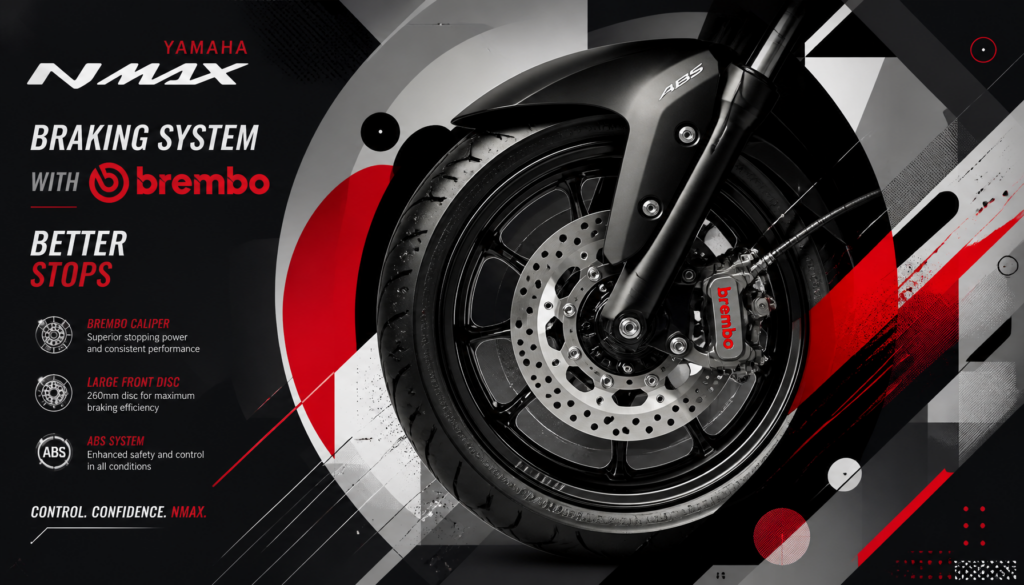
Yamaha NMAX Braking System with Brembo: Better Stops
Aug
NMAX Braking System with Brembo: When traffic closes in and a light turns yellow fast, your heart can race because one weak brake pull feels like too long to trust. In the Yamaha NMAX Braking System with Brembo, better stops matter more than ever for riders who use these scooters every day in 2026. Many owners want strong, predictable braking without drama, and this update gives them a clear target: better control, safer decisions, and less stress at the handlebars.
This guide will break that goal into practical pieces. We will cover what a modern scooter braking setup is trying to do, why Brembo is trusted for feel, and where riders usually lose confidence. You will learn how to notice early signs of good or fading performance, how to keep the system consistent, and which simple habits can make everyday riding feel steadier. We also explain what to look for before and after hard use, so no corner feels risky and every stop feels planned. So let us start with what the Yamaha NMAX Braking System with Brembo changes, how it works, and what you should check to keep your stops sharp.
Yamaha NMAX Braking System with Brembo: Better Stops, Better Confidence for Everyday Riders
NMAX Braking System with Brembo: If you’re asking whether to upgrade the Yamaha NMAX Braking System with Brembo, start with one question: are your daily stops getting longer, less predictable, or more stressful as traffic density grows? The stock setup can be enough when riding lightly, but serious commuters soon notice limits in stopping confidence, especially with longer downhill runs or repeated stop-go braking where heat builds quickly.
- Urban commuters who ride through dense city traffic can benefit most from sharper, repeatable brake response at low speeds.
- Highway riders may value extra consistency for panic responses and high-speed transitions where hesitation costs time and distance.
- Two-up riders and heavy-load users often feel added mass during emergency stops, so modulation and thermal stability become more important.
- Weekend-only riders who ride short trips and easy roads may decide no change is needed until their use case evolves.
This guide’s practical framework is simple: first compare performance gains, then control feel, then installation and legal risk, and finally whether the upgrade is worth the total cost for your real route. A strong result is not only shorter stopping distance, but also predictable feel that keeps you from over-braking in panic moments.
When assessing compatibility, focus on the full Brembo stack, not just one part. Suitable upgrades usually involve matched Brembo calipers, master cylinders, brake discs, pads, and braided brake lines that suit the Yamaha NMAX platform. Mismatched combinations can create uneven bite, excessive lever travel, or poor return feel, so fitment planning matters more than brand name alone.
NMAX Braking System with Brembo: In true use, proper matching can improve braking response, consistency, and control during hard stops, while better thermal behavior helps with repeated braking in traffic or downhill sections. Expect changes in how the lever builds pressure, how quickly the bike settles, and how confidently you can release or reapply force at low speed.
Control quality is where many riders decide the upgrade was worthwhile. Master-cylinder ratio, pad compound, and hydraulic response directly influence modulation, so a setup that is too aggressive for your style can feel tense on city roads. If you regularly carry a pillion, luggage, or ride in wet conditions, finer modulation often matters more than raw power.
Finally, installation is not a DIY-only event. Professional setup, careful brake-fluid handling, bleeding, bed-in procedures, and ABS compatibility checks are essential before aggressive riding. In areas with road inspections or insurance-linked checks, documented, correctly assembled work helps avoid disputes and supports a safer, more confident decision when upgrading the Yamaha NMAX Braking System with Brembo.
Quick Specs: Yamaha NMAX Braking System with Brembo Upgrade Checklist
NMAX Braking System with Brembo: Choosing a Yamaha NMAX Braking System with Brembo upgrade is often less about chasing a trend and more about reducing heat fade, improving repeatability, and gaining confidence in traffic. This quick specs checklist is built as a fitment-and-performance filter before you spend on parts. In dense commuting environments with repeated stop-and-go braking, a mismatched hydraulic setup can feel inconsistent, so confirming each checkpoint up front protects both safety and money.
| Upgrade area | Required stock compatibility | What changes with Brembo | Stopping performance / reliability outcome |
|---|---|---|---|
| Caliper (front/rear) | Verify mounting position, wheel clearance, and hose routing on the current Yamaha NMAX front and rear brake setup are unchanged and cleanly serviceable. | Install matched front and rear Brembo calipers sized for the same mount geometry and mechanical envelope on the bike. | Consistent clamping and better thermal handling under repeated braking, which helps reduce fade and maintains confidence over longer urban rides. |
| Master cylinder | Ensure lever perch fit, reservoir access, and line thread style of the stock control circuit are suitable for replacement and ABS behavior remains unchanged. | Upgrade to a Brembo-compatible master cylinder and lever ratio pairing that matches the caliper demand and your preferred finger pressure profile. | More predictable lever response and cleaner modulation, giving finer control when slowing in dense traffic or on split-second light-to-heavy brake transitions. |
| Brake disc / rotor compatibility | Confirm rotor mounting face, tone-ring setup, and clearance envelope expected by the NMAX platform before selecting any rotor changes. | Retain compatible rotor dimensions and interfaces unless the full brake package is validated as a matched assembly. | Stable pad contact area and reduced uneven heat transfer, which improves repeatability and avoids confidence-killing variation at the lever. |
| Pad compound | Check rotor surface condition and heat profile of your usage; confirm base pad shape and backing dimensions match the chosen calipers. | Choose a Brembo pad compound aimed at the scooter’s stop/start use rather than only occasional high-speed hard use. | Cleaner bite in repeated applications and reduced pedal/leverage surprises in wet starts when you need short stopping distances. |
| Brake line type | Inspect routing path, fitting pitch, and secure anchor points in the original brake lines. | Replace with matched Brembo lines compatible with existing fittings, preferably a reduced-expansion construction when routing allows safe clearance. | Improved pressure consistency from lever to caliper and sharper initial response, especially useful for panic-stop control. |
| Fluid specification | Keep the stock system’s approved fluid type and ABS seal compatibility as the baseline and never mix uncertain grades. | Flush and refill through the full Brembo-calibrated hydraulic path during installation and bleeding. | Lower risk of boiling, corrosion, or spongy feel, which supports braking consistency during hot-weather or repeated hard cycles. |
| ABS integration | Do not alter ABS sensor lines, pump, wiring, or calibration references without confirming baseline operation first. | After Brembo hardware installation, run a full system bleed and ABS function check before normal riding. | Prevents unexpected activation delay or intervention inconsistency, and helps keep the safety net behavior trustable when braking aggressively. |
If any row is unclear, treat it as a stop sign in your upgrade planning process. Riders who document compatibility and service steps often report smoother setup time and fewer back-and-forth runs to the workshop. This is especially valuable in regions where mechanics are expected to provide inspection-ready work records for road checks.
When in doubt, source installation from a professional familiar with brake calibration and then perform controlled bedding and adjustment rides. A disciplined checklist-based approach converts a Yamaha NMAX Braking System with Brembo decision from a gamble into a practical safety upgrade.
Why Upgrade the Yamaha NMAX Braking System
NMAX Braking System with Brembo: If your daily riding has become more than short commutes, this is the point where many riders begin to notice the limits of the Yamaha NMAX’s stock brakes. The factory setup is usually adequate when traffic is calm, but in dense, mixed-speed streets the brake lever can feel less decisive when you need instant response. That uncertainty is exactly what a brake upgrade is meant to solve, especially when you want the same stop confidence at 20 km/h through traffic lights as you do at highway merging speed.
With repeated heavy braking, heat builds up quickly and consistency can drop. That’s not a failure of your riding, it’s often a system limit: heat-related pressure changes can make modulation feel vague and the lever feel less confident after a long sequence of stops. A Yamaha NMAX Braking System with Brembo upgrade is usually considered for riders who care about repeatable feel, especially if their routes include urban traffic gaps, aggressive overtakes, or emergency braking drills.
NMAX Braking System with Brembo: In simple terms, the upgrade goal is not just “more power,” but predictable control under pressure. Stronger stopping power alone is useful, yet what riders value most is how the brake behaves from first lever pull to the last repeated stop—clear bite, stable response, and confidence when conditions change.
Upgrades matter most when:
- Heat management is critical, such as long commutes with frequent start-stop cycles.
- You ride with variable traffic speed, where quick deceleration and rapid re-application are routine.
- You carry a passenger or cargo, which increases the need for repeatable braking confidence.
- Rough weather and long descending runs place extra demand on brake fade resistance.
Where it may be unnecessary is equally important. If your use is limited to short, low-speed city runs and you seldom use hard braking, the stock brakes can remain perfectly serviceable. In markets where many riders prioritize low running costs, this is a practical reason to delay spending until riding demands grow.
Buy intent matters. Riders who value predictable control and confidence in stop-and-go traffic usually see better value from upgrading; casual riders may prefer to save and reassess after real-world riding evolves. Before spending, also consider your local inspection culture and insurance or road-safety expectations, because brake feel changes can affect maintenance habits and compliance checks. In other words, this is not only a performance decision—it is a safety and confidence decision shaped by how and where you ride.
Brembo Components & Compatibility for the Yamaha NMAX Braking System with Brembo
NMAX Braking System with Brembo: When building a safer Yamaha NMAX Braking System with Brembo, start by treating compatibility as a full-system engineering check, not a parts shopping list. A Brembo upgrade for the NMAX is only as strong as its weakest connection, and even small mismatches can create inconsistent braking behavior in real traffic conditions. Focus on balance between all parts before you chase peak stopping power.
The first checkpoint is the caliper pairing. Confirm mounting points, axle-side clearances, and fork travel geometry against the NMAX platform so the caliper sits square on the disc every time. If the caliper bracket spacing is off, the pads may not sweep evenly, which hurts linearly controlled braking when you need it most.
Next, evaluate the master cylinder with equal care. You need reservoir compatibility, matching thread interface, and a fluid path that supports clean, bubble-free pressure transfer. For a smooth Yamaha NMAX Braking System with Brembo feel, confirm the hydraulic ratio and lever geometry work together with your intended riding style, otherwise lever travel can become longer and modulation can feel uncertain under repeated hard stops.
For brake discs, pads, and braided lines, the mandatory checks are practical: rotor size/offset, pad backing plate profile, and hose line routing. A braided line with the wrong fitting angle can chafe, while a mis-sized fitting creates leaks or weak pressure retention. The line should follow protected routing so suspension movement and heat do not distort pressure delivery.
NMAX Braking System with Brembo: In many cities, regular commuting and urban traffic patterns amplify brake demands, so reliability is more critical than headline hardware. Add ABS into the equation: confirm sensor alignment, mounting clearance, and ECU signal consistency after changes. Some regions also tie compliance and insurance review to brake system integrity, so preserving ABS function and documented installation matters as much as performance.
- Mismatched caliper mounting centers: leads to uneven pad contact and reduced bite.
- Incorrect master-cylinder reservoir or port compatibility: can cause poor pressure build-up and spongy response.
- Wrong braided line fittings or bend profile: increases leakage risk and can trigger unstable lever feel.
- Rotor diameter/offset mismatch: causes drag, noise, or pad overhang.
- Incompatible pad shape for the caliper bracket: weak initial bite and accelerated wear.
- Unverified ABS sensor relocation or torque changes: may create warning lights or inconsistent modulation.
Riders who store bikes in small parking spaces or rely on frequent stop-start city use often benefit from sourcing a complete, matched parts package from a local, experienced installer who can test-fit before final assembly. A careful compatibility review is not just technical caution—it is a purchase decision safeguard that protects confidence, safety, and long-term value.
Installation, Setup & Safety for a Yamaha NMAX Braking System with Brembo
NMAX Braking System with Brembo: Installing a Yamaha NMAX Braking System with Brembo is a performance upgrade, not a cosmetic one, and the final setup quality decides whether it actually improves confidence or creates risk. Start with a practical plan: confirm why you need stronger response, what braking style you use, and whether your local conditions (traffic density, mountain passes, rain-heavy commutes) justify the investment. If you frequently ride in stop-and-go urban settings or do frequent downhill runs, spending extra time on correct setup and testing is essential before you even think about hard braking.
For sourcing, buy components as a matched package whenever possible. Prioritise Brembo calipers, master cylinder, pads, braided line, and any required mounts that are explicitly listed for your exact Yamaha NMAX variant. If a listing cannot confirm model compatibility, it is usually safer to treat it as an auto part not yet validated for your scooter. Keep invoices and packaging, because in many regions inspection or insurance processes may ask for documented parts origin after major brake changes.
NMAX Braking System with Brembo: Decide early whether to self-install or use a professional mechanic. A professional build is often best for first-timers because wrong line routing, insufficient cleaning, or contamination during assembly can undo the entire upgrade. If you go DIY, prepare a clean workspace, a torque wrench, and the service manual for your model so your Brembo conversion on the NMAX follows a known standard rather than trial and error.
- Confirm fitment and clearances: fork, wheel, and guard clearance around the caliper, lines, and hose anchors.
- Use a torque-managed approach for all mounting fasteners; do not guess hand-tight values, and re-check after a short heat cycle.
- Verify reservoir caps, banjo fittings, and seals for correct seating before pressurizing the system.
- Fill and flush with a brake fluid type that matches your bike’s service requirements, using a fresh sealed bottle and keeping the fluid from mixing across ratings.
- Perform the bleeding sequence exactly as the manual recommends, usually by cycling the control repeatedly and evacuating all trapped air until lever travel is stable.
- Bed in pads with progressive, moderate stops before tracking performance changes; this prevents glazing and improves consistency.
Post-install validation must happen before aggressive riding. Test ABS function if equipped, then run low-speed stop tests and repeated stop repeatability checks on a safe road edge; compare lever feel and travel across several cycles to catch leaks or fading. Re-check pad bite consistency and line pressure at cold and warm states. Finish with one short, conservative ride only after everything is stable, and then record your impressions. This disciplined process turns a risky modification into a reliable upgrade you can trust every day, while protecting both rider safety and long-term component life.
Buyer Concerns: Local Rules, Warranty, and Daily Use Before You Commit to a Brembo Upgrade
NMAX Braking System with Brembo: Upgrading the Yamaha NMAX Braking System with Brembo is often driven by the desire for better modulation and confidence, but buyers in this segment usually pause when legal and practical risks are unclear. Before spending on calipers, a new master cylinder, braided lines, or pads, treat this like any other modified commuter setup: the strongest system is only useful if it is legal, insurable, and suitable for your real daily route.
Start with local compliance. In many regions, modified brake parts must pass inspection rules tied to roadworthiness, and some offices expect original brake components or clear documentation after any hydraulic change. Ask the inspector what paperwork is needed for a Brembo-based setup, and keep invoices, part numbers, and fitting notes from the installer. That also helps if enforcement officers question your machine during random checks.
- Insurance check: Notify your insurer before installation. Front and rear braking changes can affect claim handling after an accident, especially if only part of the system is upgraded.
- Warranty clarity: Ask both dealer and shop how the upgrade may affect coverage on related components and whether workmanship is written into a service guarantee.
- Workshop quality: Verify the shop is experienced with ABS compatibility, proper bleeding, and post-install inspection. A bargain install with poor setup can erase the perceived benefit of premium parts.
- Test-rides and downtime: Expect fitting plus re-check time for brake-fluid service, cable routing checks, and brake feel confirmation before aggressive riding.
- Environment fit: If you ride through monsoon congestion, consider progressive feel requirements, weather confidence, and how your chosen pad compound responds in heat and repeated stops.
- Use-case fit: A dense city commuter load, hilly two-up travel, and occasional dirt detours all demand different brake feel; avoid overbuilding for one scenario if daily utility is your priority.
Budgeting intelligently is usually the best pre-purchase guardrail. Separate part cost from installation, fluid and setup, and follow-up adjustment. Many buyers underestimate this and end up pausing upgrades mid-project, which can leave handling inconsistent. Set a firm total budget, include contingency for final tuning, and avoid adding accessories that your riding habits don’t require. If your ride profile is mostly stop-and-go city use and short errands, a clean, correctly installed Yamaha NMAX Braking System with Brembo conversion with predictable servicing beats an oversized track-oriented setup in both value and long-term reliability.
Frequently Asked Questions
Is a Yamaha NMAX Braking System with Brembo legal for street use in my country or state?
For many riders, this is the first objection: legality. A Brembo upgrade can be streetable, but only when installed with compliant parts and documented setup that matches your local roadworthiness rules. In countries or states with strict inspection systems or mandatory insurance declarations, check first with the transport authority or dealer so your commuter can remain road-legal and protected in case of a crash review.
Will upgrading to Brembo affect or disable ABS on the Yamaha NMAX?
A common concern is whether a better caliper, line, or master-cylinder pairing could confuse the ABS circuit. In most cases, if the setup is properly matched and installed, ABS function is retained, but this is precisely why professional setup and calibration are emphasized in the upgrade process. Ask the installer to confirm ABS compatibility before aggressive riding, especially if you ride in traffic where quick cut-in braking is routine.
Should I upgrade both ends or just the front for a Yamaha NMAX Brembo setup?
Riders often wonder whether to spend budget only on the front for city commuting; it can improve initial confidence because front braking is dominant. However, heat consistency, modulation, and predictable feel under repeated braking often improve further with balanced front-and-rear planning when matched for pad compound and lever ratio. If your bike is used mostly for short wet city runs, a front-only conversion might be enough, while downhill riders usually benefit from a complete compatible approach after evaluating cost and local use habits.
How does Brembo braking perform in repeated wet-weather city stops and downhill runs?
With a correctly matched system, Brembo components are typically used to improve response and consistency, which is critical for repeated stops in stop-go roads and long descents. For wet urban conditions, the key is not just hardware name-dropping but proper pad bedding, line condition, and fluid quality to keep feel predictable after repeated use. If you often ride in monsoon-like weather or variable traction zones, your braking confidence improves when the setup is tested and tuned rather than rushed.
Can I keep factory maintenance intervals, or how do pad, line, and fluid checks change after conversion?
After conversion, many owners ask if factory maintenance timing is still enough. As a baseline, the original service interval is a starting point, but upgraded systems deserve an early post-install check: new pad bedding, line inspection, and fluid bleed quality are part of the setup process. For daily-use storage in high-heat or high-humidity conditions, add periodic visual checks of pads, braided lines, and fluid so the enhanced braking feel you paid for does not fade into inconsistency later.
Should You Buy? Our Verdict on the Yamaha NMAX Braking System with Brembo
Yamaha NMAX Braking System with Brembo is worth serious consideration if your riding style already pushes the limits of predictable stock response. If you regularly ride in dense city traffic, downhill roads, or wet weather, a matched Brembo setup can address the exact gaps that matter most: stronger initial response, better heat tolerance over repeated stops, and improved confidence when braking hard. On the other hand, if your use is mostly short, relaxed rides, the upgrade may not feel necessary in day-to-day commuting.
Use this quick decision matrix to settle the question quickly:
- Rider type: If you are a daily commuter, learner, or rider in stop-and-go conditions, the brake-feel improvement from Brembo calipers, proper master cylinder pairing, and braided lines can help control and consistency; skip for purely casual weekend use.
- Rider type: If you are an experienced rider who frequently brakes hard, carries variable loads, or uses aggressive corner-entry technique, a tuned Brembo brake disc and pad combination is a stronger match for confidence and control.
- Legal environment: In regions with strict periodic inspection, insurance scrutiny, or police checks around brake performance, upgrading can be justified by more predictable braking behavior, but only after confirming setup legality and ABS compatibility with a certified technician.
- Budget reality: If your budget allows full parts sourcing plus professional fitting, fluid bleeding, and final testing, you are in the safer decision zone. If funds are tight, buy only if you can still include proper installation and setup; partial upgrades are not a reliable substitute.
- Expected mileage: High-mileage riders, especially those who brake hard over long commutes, gain the most because fade resistance and repeatability matter more as brake cycles climb. Lower-mileage riders may see less measurable benefit beyond feel.
- Storage/use constraints: If the scooter is parked outdoors in humid or dusty conditions, keep parts compatibility and maintenance intervals realistic; a high-performance setup still needs consistent inspection of fluid and pad condition.
The verdict: upgrade if your riding pattern repeatedly exposes the limits of the stock system and you can support it with proper maintenance discipline. If you are unsure, the Yamaha NMAX Braking System with Brembo is not a weekend bolt-on gamble—it is a system-level decision. To reduce risk, first confirm component compatibility for your exact model year and configuration, then get a mechanic consultation, and only then proceed to installation followed by a documented safety ride test before aggressive use. That process gives you clearer brakes and safer ownership confidence.
We at Speedzone specialize in offering top-quality servicing for a variety of premium motorcycle brands. Whether you ride a Yamaha, Honda, KTM, Suzuki, Kawasaki, SYM, Aprilia, Piaggio, or Mutt Motorcycle, you can trust us to keep your ride running smoothly.
Book Your Service Today
Ready to give your motorcycle the care it deserves? Or just curious to know more? With our premium motorcycle accessories available catering to every motorbike models. Book your motorcycle servicing with us or drop by our showroom today and experience the difference of expert servicing tailored to your brand and friendly staffs!
