
Motorcycle blind spots
Can You Navigate Motorcycle Blind Spots? Singapore 2026 Rules
Jun
Navigate Motorcycle Blind Spots: Motorcycle blind spots can turn a simple ride into a dangerous challenge. In Singapore, where roads are bustling and every second counts, understanding these blind spots is crucial for safety. As we approach the 2026 rules regarding motorcycle navigation, knowing how to effectively navigate motorcycle blind spots is more important than ever.
This article will explore what these upcoming regulations entail and why they matter. We will also provide practical tips to help riders stay safe on the road. With the right knowledge, you can ride with confidence and avoid common accidents caused by blind spots. Let’s dive into what you need to know.
Understanding Motorcycle Blind Spots: Essential Knowledge for Every Rider
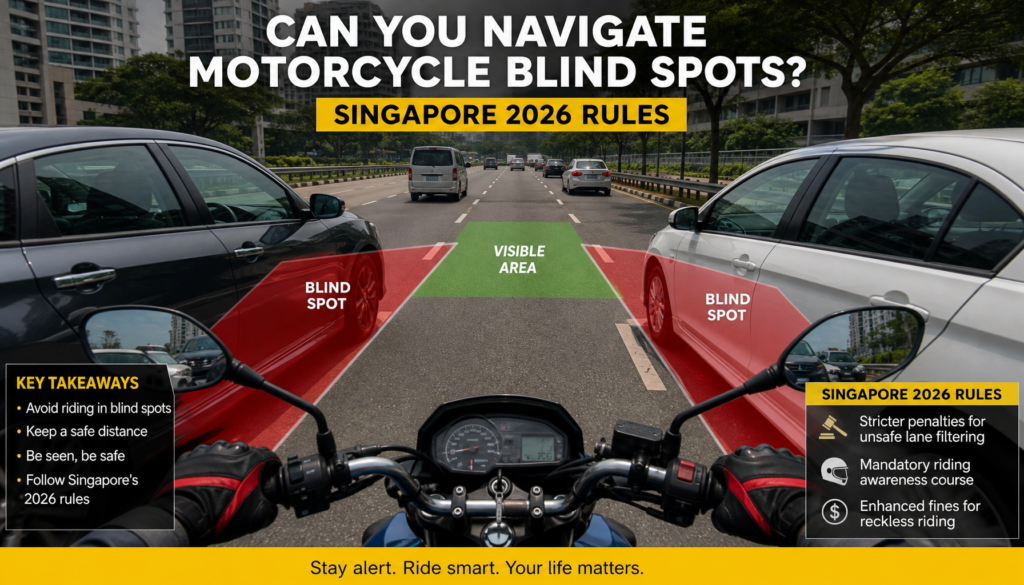
Navigate Motorcycle Blind Spots: Understanding motorcycle blind spots is crucial for every rider in Singapore, especially with the new regulations set to take effect in 2026. Blind spots refer to areas around vehicles that cannot easily be seen through mirrors alone, making motorcyclists particularly vulnerable due to their smaller size and maneuverability on the road.
In Singapore’s busy traffic, large vehicles such as trucks, buses, and SUVs possess wider blind spots located on the sides, rear, and front areas. This makes it imperative for motorcyclists to avoid lingering in these zones for extended periods; being in these spots increases the chances of accidents. By understanding where these blind spot zones are, riders can make informed decisions about their positioning on the road.
Navigate Motorcycle Blind Spots: Visibility is a key factor in avoiding blind spot incidents. Motorcyclists can enhance their presence in traffic by wearing bright gear, using headlights even during the day, and ensuring their motorcycles are positioned in ways that are easily visible to other drivers. These simple measures can significantly reduce the risk of being overlooked.
Moreover, safe overtaking and lane positioning play an essential role in maintaining visibility. Motorcyclists should be cautious about their lane positioning and should pass larger vehicles quickly and safely, ensuring that they do not remain hidden beside them. Defensive riding techniques are equally important. Riders must always anticipate sudden lane changes or turns from nearby vehicles; maintaining a safe distance, staying alert, and reading traffic patterns are all critical defensive riding habits that can prevent accidents.
With the upcoming 2026 regulations, it’s more vital than ever for riders to be well-informed and implement these safety practices. Knowing how to navigate motorcycle blind spots not only ensures compliance with new rules but also enhances road safety for all road users in Singapore.
Understanding What Blind Spots Are
Navigate Motorcycle Blind Spots: Understanding blind spots is crucial for all motorcyclists, especially in the busy streets of Singapore where road rules are strict and traffic is heavy. Blind spots are defined as areas around a vehicle that are not visible to the driver through standard mirrors. For motorcyclists, these blind spots pose a unique risk due to their smaller size, making them harder for other drivers to detect in traffic. This invisibility can lead to dangerous situations, particularly when driving near larger vehicles.
Typically, larger vehicles such as trucks, buses, and SUVs have much wider blind spots, encompassing the sides, rear, and front. This presents a significant risk to motorcyclists, as they can easily go unnoticed while situated in these zones. Riders must educate themselves about these common vehicle blind spot zones to enhance their safety and navigate roads more effectively.
Navigate Motorcycle Blind Spots: To mitigate the risks associated with blind spots, it’s essential to implement strategies that help maintain visibility. Wearing bright gear, using headlights regardless of the time of day, and positioning the motorcycle where other drivers can easily see it are key tactics that can greatly reduce the chance of being overlooked. In Singapore, where motorcycle riding is popular, following these protocols can significantly contribute to a safer riding experience.
Moreover, understanding safe overtaking techniques and effective lane positioning is vital. Motorcyclists should avoid lingering beside larger vehicles for extended periods and instead pass quickly and safely to minimize the risk of being caught in blind spots. By adopting defensive riding techniques, such as anticipating sudden lane changes or turns from nearby vehicles, riders can significantly enhance their safety on the roads.
By familiarizing themselves with blind spot dynamics and taking proactive measures to maximize visibility, motorcyclists can ride with more confidence and agility in Singapore’s bustling traffic.
Common Vehicle Blind Spot Zones
Navigate Motorcycle Blind Spots: Understanding motorcycle blind spots is crucial for every rider in Singapore, especially in an urban environment where large vehicles like trucks, buses, and SUVs dominate the roads. Blind spots are areas around vehicles that are not visible in mirrors, and motorcyclists, due to their smaller size, are particularly vulnerable in these zones.
Large vehicles tend to have wider blind spots that can extend on the sides, rear, and front areas. For instance, trucks often have extensive blind spots to the right and behind, where a motorcyclist could easily disappear from the driver’s view. Buses, similarly, have significant blind spots on either side, making them perilous for motorcyclists, especially in heavy traffic or during lane changes. SUVs, while smaller than trucks, can also obstruct a rider’s visibility if they linger too close. Therefore, it’s vital for motorcyclists to avoid remaining in these blind spot zones for extended periods.
Navigate Motorcycle Blind Spots: To navigate these potential hazards effectively, riders should adopt several defensive riding techniques. Wearing bright gear, utilizing headlights even during the day, and positioning the motorcycle where it is clearly visible to other drivers can significantly reduce the risk of being overlooked. Additionally, when overtaking large vehicles, it’s essential to do so quickly and safely, ensuring there’s adequate space before re-entering a lane.
Lastly, maintaining a safe distance and staying alert to the traffic patterns around large vehicles will equip riders to anticipate sudden lane changes or turns. With upcoming changes in regulations by the Land Transport Authority (LTA) in mind for 2026, building these habits will not only provide safety but also enhance compliance with local riding practices.
How Riders Can Stay Visible
Navigate Motorcycle Blind Spots: To ensure safety on Singapore’s roads, it is crucial for motorcyclists to adopt strategies that enhance their visibility. One of the simplest yet most effective ways is by wearing bright gear. Utilizing fluorescent or reflective materials can significantly improve a rider’s chances of being seen, especially in low-light conditions or during rainy weather, which is quite common in Singapore.
Another essential visibility strategy is the proper use of headlights. Motorcyclists should always keep their headlights on, even during the day. This makes the bike more noticeable to other drivers, who might otherwise be focused on larger vehicles.
Navigate Motorcycle Blind Spots: Strategic positioning on the road can further enhance visibility. Riders should avoid lingering in a car’s blind spot and instead position themselves where they can be easily seen—typically to the side of larger vehicles when stopped at traffic lights or in slow-moving traffic. This proactive approach not only helps avoid collisions but also promotes safer interactions with other road users.
Utilizing the high-visibility colours can aid greatly in making a rider stand out. Singaporean roads, especially in urban settings, can be congested, and being noticed is imperative. In addition to bright helmets and vests, riders might consider accessories such as reflective strips on their motorcycles.
Overall, by combining bright gear, effective use of headlights, and smart road positioning, motorcyclists can significantly reduce their chances of being overlooked. In a city like Singapore, where traffic conditions and regulations are continuously evolving, adopting these visibility strategies can lead to safer riding experiences and help riders navigate the challenges of motorcycle blind spots.
Safe Overtaking and Lane Positioning
Navigate Motorcycle Blind Spots: Safe overtaking and lane positioning are crucial skills for motorcyclists, especially in a bustling urban environment like Singapore. Riders must be aware of their visibility while navigating traffic and utilizing the roads to ensure safety. Proper lane positioning means not lingering in areas that are typically blind spots for other vehicles, such as beside trucks and buses.
When overtaking, motorcyclists should always aim to pass quickly and safely. This involves making sure that the lane is clear and adjusting speed accordingly. If you find yourself next to a larger vehicle, accelerate to pass swiftly rather than staying parallel to avoid being hidden from view. Strategically positioning your motorcycle away from vehicles’ blind spots will also enhance visibility.
In addition to positioning, wearing bright gear and using headlights during the day can significantly improve your chances of being seen. As per Singapore’s Land Transport Authority regulations, visibility is not just a personal safety measure, but a vital part of road safety for everyone. Adapting a proactive approach, keenly observing traffic patterns, and anticipating the movements of larger vehicles can contribute to a safer riding experience.
To further enhance your riding practices, consider these tips:
- Always remain aware of surrounding vehicles and their potential blind spots.
- Utilize the entire lane so that you are positioned where you can be seen easily.
- Do not hesitate to change lanes quickly but safely while overtaking.
- Practice defensive riding by maintaining a safe distance and staying alert.
- Engage your headlight even during the day to increase visibility.
Overall, by understanding the dynamics of motorcycle blind spots and implementing safe overtaking maneuvers, riders can significantly minimize the risk of accidents and enhance their riding experience on Singapore’s roads.
Defensive Riding Techniques
Navigate Motorcycle Blind Spots: When it comes to navigating motorcycle blind spots, adopting defensive riding techniques is crucial for all riders. These strategies help motorcyclists remain safe while anticipating the potential actions of nearby vehicles, ensuring a smoother ride on the often congested roads of Singapore.
Understanding blind spots is the first step in defensive riding. Blind spots are areas around vehicles that drivers cannot see through their mirrors. Given their smaller size, motorcycles can be particularly difficult for other drivers to notice. Thus, staying aware of these zones, especially those around large vehicles such as trucks and buses, is vital.
Navigate Motorcycle Blind Spots: One effective technique is to avoid lingering in the blind spots of larger vehicles. These vehicles have wider blind spots that extend to the sides, rear, and front. Instead of sitting alongside them, riders should position themselves in a lane where they can be seen clearly by other motorists, allowing for safer overtaking and minimizing the risk of accidents.
Additionally, staying visible is key to navigating motorcycle blind spots. Bright gear and using headlights not only improve visibility during the day but also play a significant role at night. Riders should always position their motorcycles in a way that increases their chances of being seen by other drivers, perhaps by making eye contact with drivers at intersections.
Defensive riding also means anticipating sudden lane changes or turns from nearby vehicles. Keeping a safe distance, staying alert, and continuously reading traffic patterns are essential. When overtaking, it’s important for motorcyclists to do so quickly and safely, minimizing the time spent in blind spots.
By understanding how to navigate blind spots effectively and employing these defensive riding techniques, motorcyclists can enhance their safety and reduce the likelihood of accidents. Equip yourself with these skills and remain proactive on the roads. Remember, safety is paramount.
Quick Specs: Motorcycle Blind Spot Awareness Tips
Navigate Motorcycle Blind Spots: Being aware of motorcycle blind spots is crucial for safe riding, particularly in the bustling streets of Singapore. Below, we summarize essential tips and strategies that every motorcyclist should adopt to navigate blind spots effectively.
| Tip | Description |
|---|---|
| Understanding Blind Spots | Recognize that blind spots are areas around vehicles not visible in mirrors. Motorcycles, due to their smaller size, are often unnoticed in these zones. |
| Avoiding Vehicle Blind Spot Zones | Steer clear of large vehicles such as trucks and buses, which have extensive blind spots on their sides and rear. Limiting your time in these zones reduces accident risk. |
| Enhancing Visibility | Wear bright clothing and utilize headlights, even during the day. Position your motorcycle so it is easily visible to drivers, further reducing blind spots. |
| Safe Overtaking | Adopt proper lane positioning during overtaking maneuvers. Transition quickly past blind spots to ensure you’re not caught in a vehicle’s blind zone. |
| Defensive Riding Techniques | Stay vigilant and anticipate the actions of nearby drivers. Maintaining a safe distance and being aware of traffic patterns are key defensive strategies. |
These strategies not only enhance your visibility but also ensure that you can anticipate and react effectively to the movements of larger vehicles on the road. Given the recent regulations in Singapore surrounding motorcycle safety, incorporating these tips can significantly lower the likelihood of accidents caused by blind spots.
Investing time in understanding and applying these motorcycle blind spot awareness tips will lead to a more confident and safer riding experience in 2026 and beyond. Remember, the goal is not just to ride but to do so with a focus on safety and visibility.
Frequently Asked Questions
What are motorcycle blind spots?
Motorcycle blind spots refer to areas around a moving vehicle that are not visible to the rider through standard mirrors. These zones can pose significant risks, especially for motorcyclists, as smaller bikes are often overlooked by other drivers on the road. Understanding these blind spots is crucial for ensuring rider safety.
How can I identify dangerous blind spots?
To identify blind spots, it’s essential to be aware of common vehicle zones. Large vehicles like trucks, buses, and SUVs exhibit wider blind spots, especially on their sides, rear, and front areas. Riders are advised to avoid lingering in these zones to minimize their risk of being involved in an accident.
What can I do to stay visible on the road?
To enhance visibility while riding, motorcyclists should consider wearing bright gear and using their headlights, even during the day. Positioning your motorcycle in areas where drivers can easily see you helps reduce the chances of being overlooked in traffic.
How do safe overtaking and lane positioning relate to blind spots?
Proper lane positioning and safe overtaking are essential skills for any rider. It’s important to pass vehicles quickly and safely, especially when moving through areas known for blind spots. Making your movements predictable encourages safer interactions with other drivers.
Why are defensive riding techniques important?
Defensive riding techniques are critical in anticipating sudden lane changes or turns from nearby vehicles. Maintaining safe distances, staying alert, and learning to read traffic patterns are key habits for enhancing safety on the road. In Singapore, adhering to LTA regulations and adopting these techniques can not only improve personal safety but also ensure compliance with the latest riding standards.
Should You Take Motorcycle Blind Spots Seriously? Our Verdict
Navigate Motorcycle Blind Spots: In the bustling streets of Singapore, the importance of understanding motorcycle blind spots cannot be overstated. As motorcyclists navigate through traffic, they often find themselves at the mercy of larger vehicles that have significant blind spots, making them vulnerable to accidents. The critical nature of these zones demands that riders take proactive measures to ensure their visibility and safety on the road.
Blind spots are defined as areas around vehicles that are not easily visible through mirrors, posing a serious risk to smaller vehicles like motorcycles. This risk is compounded by the fact that motorcycles are less pronounced in traffic, making them harder to detect for drivers of larger vehicles such as trucks, buses, and SUVs. As a rider in Singapore, it is essential to recognize the common vehicle blind spot zones and strategically avoid lingering in these areas.
Navigate Motorcycle Blind Spots: One effective strategy for staying safe is to enhance your visibility. Simple measures like wearing bright, reflective gear, ensuring your headlights are always on, and cautiously positioning your motorcycle can significantly reduce the likelihood of being overlooked. Moreover, riders should practice safe overtaking techniques and maintain an appropriate lane position to avoid becoming a casualty of unexpected lane changes.
The application of defensive riding techniques is vital in preventing accidents. This means always being aware of your surroundings, anticipating the actions of nearby vehicles, and maintaining a safe following distance. By doing so, you position yourself as a more visible participant in traffic and mitigate the risks associated with motorcycle blind spots.
In conclusion, taking motorcycle blind spots seriously is not just a recommendation; it’s a necessity for your safety. Implementing the practices discussed above not only protects you but also promotes a safer riding environment for everyone on the road. So gear up, stay visible, and ride safely; the streets of Singapore are waiting for you.
We at Speedzone specialize in offering top-quality servicing for a variety of premium motorcycle brands. Whether you ride a Yamaha, Honda, KTM, Suzuki, Kawasaki, SYM, Aprilia, Piaggio, or Mutt Motorcycle, you can trust us to keep your ride running smoothly.
Book Your Service Today
Ready to give your motorcycle the care it deserves? Or just curious to know more? With our premium motorcycle accessories available catering to every motorbike models. Book your motorcycle servicing with us or drop by our showroom today and experience the difference of expert servicing tailored to your brand and friendly staffs!
