
Fuel consumption, Motorcycle Fuel Efficiency
Fuel Costs: Save on Fuel with Smart Routes & Riding Habits
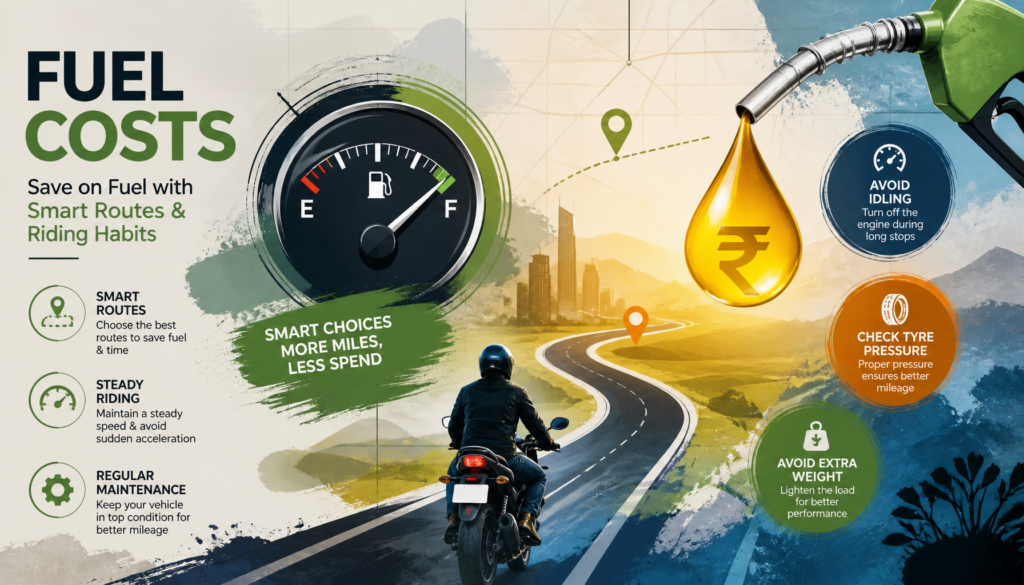
Aug
Fuel Costs: Fuel Costs can quietly drain your wallet for riders in every city. If your commute feels heavier every season, you are not alone. Little changes in how you plan a trip and how you ride can add up to a big difference. In 2026, with traffic and road pricing shifting fast, smart fuel habits are even more valuable.
This guide shows how to cut waste at the route level first, then by simple riding choices. We will cover practical ways to map shorter, smoother paths, avoid repeated stop-and-go, and use traffic patterns without overthinking it. You will also learn how acceleration, speed control, and trip timing can lower the amount you spend at the pump without slowing your day.
We will keep the advice simple and realistic for daily riders, whether you are on a scooter, motorcycle, or even a shared e-bike setup. No complex math needed, just clear steps you can test on your next ride. Let’s start by seeing where most fuel loss happens, then move straight into fixes you can apply this week.
Fuel Costs Under Control in 2026: How Delivery Riders Can Save More Without Slowing Down
Fuel Costs: If you ride for deliveries, you know this feeling: one short hop to the café, ten extra seconds at traffic, a long wait for order confirmation, then another hard restart. Those repeated cycles from frequent stops, peak-hour traffic, and idle waits add up fast, and your bike can feel like it is burning cash instead of petrol. That is why focusing on fuel strategy is just as important as knowing your route.
This section is for delivery riders operating daily in busy streets, whether on scooters or motorcycles, who want to protect take-home pay. For you, Fuel Costs are not abstract—they’re the hidden leak in every shift. Lowering fuel burn per order lowers cost per drop, which directly improves net earnings even when hourly orders stay the same.
Use this practical 7-point flow over the next two weeks and track the results every night:
- 1) Plan with traffic-aware routing: Use GPS and route-planning apps to select faster paths before leaving your first pickup so you avoid predictable jams and keep momentum.
- 2) Combine nearby deliveries: Reorder your sequence to bundle pickups and drops in the same direction, reducing backtracking and unnecessary mileage.
- 3) Cut detours: Avoid extra loops around blocked roads, repeated parking circles, and long lane changes that create stop-start micro-burn.
- 4) Ride smoothly: Maintain a steady speed and avoid sudden acceleration or hard braking whenever possible; this keeps the engine in a cleaner consumption band.
- 5) Optimize manual control: If you ride a manual transmission motorcycle, shift efficiently and avoid over-revving; each gear misuse wastes fuel.
- 6) Reduce idling waste: Turn off the engine during long waits for dispatch updates, order pickups, or curb-side standstills; this is often the quickest immediate saving.
- 7) Enforce a cost-control routine: Keep tires inflated correctly, change oil and air filters on time, clean and lube the chain, compare local station prices, carry only essentials in correctly sized delivery boxes, and record distance, fills, and monthly spend.
Many riders assume only expensive upgrades can reduce expenses, but these habits and checks are mostly discipline-based and low-cost. In markets where riders buy fuel locally every few days, comparing prices and maintaining a simple expense log is one of the fastest ways to build predictability. If you implement one change per point this week and review your average spend per delivery, you’ll quickly see the difference. Fuel Costs start under control, and you move from guessing to managing your riding business with confidence.
Quick Specs: Fuel-Cost Control Variables You Should Track This Week
Fuel Costs: Running a delivery route this week gives you a clean baseline for every decision, so begin with a practical tracking sheet. The goal is simple: measure your current behavior, compare it to an optimized version, and let the data show where your Fuel Costs can drop without slowing your deliveries. Keep the process simple and repeatable using only what you already collect: odometer readings, fuel app totals, phone logs, and service records.
Use the comparison format below to record this week’s values and next week’s target values:
| Control variable | Baseline (this week) | Optimized target | Units and source |
|---|---|---|---|
| Route length per shift | Your recorded total distance | Same deliveries with fewer detours | km per shift; odometer + route log from GPS/route-planning app |
| Average waiting time | Current average wait between order events | Reduced average wait via batching and better scheduling | Minutes per order; phone log + delivery app timestamps |
| Idle duration | Idle minutes at stops/traffic without moving | Lower idle minutes by planning and engine-off discipline during waits | Minutes per shift; phone log + manual note or app |
| Throttle smoothness habits | Frequent abrupt acceleration and hard braking | Calmer throttle application and smoother braking | Events per 100 km (or notes score); ride notes + app telemetry if available |
| Tire pressure level | Current measured pressure | Consistent and correct pressure for efficient ride feel | PSI or kPa; service records + pressure checks at maintenance intervals |
| Monthly fuel cost per delivery | Current currency spend divided by completed deliveries | Lower currency per delivery from above behavior changes | Currency/order = total monthly fuel spend ÷ total deliveries; fuel app + order log |
Fuel Costs: Set a small weekly goal: improve one metric at a time so you can identify what truly lowers fuel costs in your traffic pattern. For riders who buy fuel based on station prices, the local fuel price spread can change by location and shift time, so compare nearby stations in your fuel app before refill and update your monthly baseline.
- Route planning: Use GPS routing to avoid traffic loops, combine pickups, and cut avoidable distance before your shift.
- Riding habits: Keep speed steady, avoid harsh throttle and braking, and skip unnecessary revving.
- Idling control: During long waits, turning off the engine protects both fuel usage and stack-up costs.
- Maintenance checks: Log tire pressure and regular servicing so mechanical losses do not hide behind behavioral improvements.
- Decision trigger: Re-check the table after one full week; if your fuel costs per delivery fall, repeat the pattern and keep it as your default operating plan.
Route Planning vs Old-School Navigation: Which Route Method Saves More Fuel for Delivery Work
Fuel Costs: For delivery riders, route choice is one of the most practical ways to control Fuel Costs before you even start your daily shift. A GPS and route-planning app workflow and an old-school/manual planning method can both reach the same destination list, but they behave very differently once traffic, delays, and changing order queues begin. If your income depends on volume and timing, the route method you use directly affects how many kilometers you spend between pickups and drops, so this is not just a convenience choice.
Below is how the two approaches compare in real delivery conditions:
| Route factor | GPS + route-planning apps | Old-school/manual planning |
|---|---|---|
| Dynamic traffic avoidance | Adjusts around congestion, helping reduce stop-and-go exposure and idle loops. | Depends on rider memory or static assumptions, so delays can force last-minute detours. |
| Delivery clustering | Groups nearby jobs and nearby order clusters, making repeated stops cleaner and shorter. | Clustering is manual and can be missed during high-order periods, increasing travel spread. |
| Stop order optimization | Reorders stops as needed to keep sequencing efficient over multiple points. | Often follows a fixed routine, which is easier to remember but not always shortest. |
| Detour reduction | Can reduce unnecessary detours by suggesting alternatives before distance grows. | Wrong turns are corrected only after they happen, often with extra fuel burn. |
| Repeat-route predictability | Great for adapting routes when order flow changes, even with the same delivery zones. | Highly predictable for riders who run identical routes every day. |
Fuel Costs: In dense urban areas, where traffic shifts by hour and deliveries stack up, GPS-led planning usually wins on fuel savings because it continuously cuts waiting, detours, and idle riding. In suburban districts with fewer choke points, riders with stable schedules can still perform well with a manual plan, especially when they repeat routes and can rely on local familiarity. However, if your schedule is bursty—multiple short orders, changing pickup windows, or unexpected reroutes—using GPS routing tends to protect fuel more consistently. A practical path forward is to pair both methods: run a planned app route first, then keep a short manual backup for known repeat zones.
For conversion-minded riders, the real decision is simple: if your goal is lower daily spend per kilometre and stronger margins, use the tool that reduces uncertainty. Even one reduction in unnecessary detours plus better stop sequencing adds up quickly across a month, and that directly supports a healthier balance between time, earnings, and fuel spending.
Fuel-Efficient Riding Habits That Cut Consumption Immediately
Fuel Costs: For delivery riders, fuel is often the largest daily operating expense after commissions, so small changes in throttle control can protect your margin immediately. The fastest gains usually come from **how** you ride, not expensive upgrades. If your goal is to reduce Fuel Costs today rather than next month, focus on consistency, smoothness, and disciplined stop-and-go habits.
Start with a steady speed routine. Constantly speeding up and slowing down wastes energy, especially in urban traffic. In dense routes, ride in a predictable pace instead of repeatedly chasing gaps, then braking hard; this lowers spikes in consumption and helps you stay calmer in mixed traffic. Think of it as maintaining momentum rather than chasing speed.
Avoid sudden acceleration and hard braking whenever possible. Smooth throttle openings and progressive braking reduce the load on your engine and front tire friction losses. If conditions require a speed change, use early planning: check mirrors, signal, then make a single confident move rather than multiple corrections.
Fuel Costs: For manual motorcycles, efficient shifting matters as much as throttle control. Shift before you force the bike to rev too high, and avoid unnecessary high-speed throttle with too low a gear. Each extra shift is a chance to lose momentum; each late downshift adds strain and can burn more fuel, especially over repeated deliveries.
When waiting for orders, customer pickups, or building a group load, make engine-off discipline a habit. If you will be stationary for a meaningful wait, switch off cleanly and only restart when needed to move. Do it safely: avoid doing this where your start-stop exposure is high and always follow local traffic rules when re-entering flow. A quick stop-start with no benefit only adds wear and confusion.
- Minute 1–3: In a safe, legal open lane, practice smooth launch and throttle control for 50 meters without abrupt pedal/throttle inputs.
- Minute 4–7: Practice a repeatable steady-speed loop, focusing on light steering corrections instead of frequent braking/accelerating.
- Minute 8–11: On a safe training section, rehearse efficient manual shifts so each change is calm and early.
- Minute 12–15: Simulate short waits: stop, turn off engine, restart only after a deliberate go signal, then merge only with full check of visibility and lane gaps.
Always apply safety limits: choose downhill coasting only where visibility is clear, never when a merge is needed, and never with a blind lane change risk. These habits support legal, predictable movement while tackling traffic density and delivery deadlines. As muscle memory builds, your dashboard and fuel log should show fewer empty burns at low productivity points, which is the same logic that helps long-term fuel-efficiency decisions: smarter riding now builds stronger confidence for bigger cost-saving choices later.
Maintenance Moves That Improve Mileage (Without Expensive Upgrades)
Fuel Costs: Fuel costs can quietly erase earnings for delivery riders, so the smallest maintenance changes matter. Route choice and riding habits reduce waste, but maintenance controls what the engine can do with every litre you buy. Focusing on these service habits first is the fastest way to lower Fuel Costs without spending on expensive upgrades.
Start with tyre pressure. Underinflated or uneven tyres increase rolling resistance, so the engine must work harder to move from a standstill and when accelerating at every light. For riders doing repeated short stops, that added load happens dozens of times an hour. Correct pressure reduces friction, smooths the contact patch, and keeps throttle response predictable, which translates into steadier fuel use during long runs.
Engine oil and air filter care is the next high-impact task. Clean oil lowers internal friction and heat, while a fresh air path helps each combustion cycle run more cleanly. A clogged filter or old oil means the engine compensates with extra effort, and that often shows up as a softer pull and higher fuel burn. Keeping these in a regular service rhythm improves combustion efficiency and keeps the bike responsive when you need quick launches.
Fuel Costs: Chain maintenance is often overlooked because it looks simple, yet it directly affects mileage. Dirt, rust, or insufficient lubrication increase drivetrain drag and make throttle corrections feel delayed. A cleaned and properly lubed chain transfers power more efficiently and reduces jerky response, so you avoid over-throttling in traffic or when restarting from a standstill. In dense courier areas, this smoother feel is a real advantage over a full shift.
Engine tune checks complete the picture. A periodic tune keeps idle quality, throttle response, and overall fueling behavior stable for normal delivery loads. If tuning drifts, riders usually compensate unconsciously with abrupt wrist inputs, which costs fuel and confidence. A stable tune helps you maintain speed cleanly, especially in stop-go conditions where many municipalities discourage unnecessary idling.
- Pre-shift (daily): Quick visual check for chain condition and tyre pressure trend; remove heavy dirt from chain links if it was exposed to weather or dust.
- Weekly: Full chain cleaning and lubrication, then recheck for smooth, even movement after every turn.
- Monthly: Review engine oil level and quality, service the air filter as needed, and log any smoke, vibration, or uneven throttle signs.
- Every few weeks: Request or perform basic engine tune checks if the bike feels flat, rough, or slower than usual, especially before busy delivery days.
These tasks do not require a new bike, only discipline. Riders who add this routine to weekly planning tend to spend less time troubleshooting and more time completing jobs, and that consistency builds confidence with customers and dispatch. If you are budget-conscious, this is the practical way to protect your margin now while keeping long-term performance reliable.
Reduce Unnecessary Fuel Usage: Lighter Loads, Lower Drag, Shorter Idles
Fuel Costs: Every delivery cycle tests your margins, and Fuel Costs move with practical details like load shape, waiting habits, and throttle control. Long routes or long idles are not the only drivers of expense; a messy dispatch setup can burn fuel before you even hit your first stop. If you want lower fuel costs without buying anything new, this is where riders see fast gains.
Before each shift, reduce unnecessary load the same way you reduce unnecessary miles. Keep only essential tools and items in your bag, and leave duplicates at the base for later. Use appropriately sized delivery boxes rather than oversized ones so the bike carries only what it needs, because extra volume increases drag and raises resistance in traffic. This small change also improves balance, which is often overlooked but matters during stop-and-go city movement.
Avoid stacking loose cargo whenever possible. Loose items force small corrections, especially over bumps and hard braking points, and can encourage stronger throttle and brake inputs that waste fuel. A stable, compact load lets you ride smoother and more controlled, especially in dense streets where sudden adjustments are common.
Use these shift-specific actions for the busiest moments:
- Peak dispatch chaos: pre-stage only essential items before rush windows so you spend less time searching, organizing, and waiting with the engine running while orders overlap.
- Long queue pickups: choose a safe holding position and turn off the engine during long waits instead of idling through every checkpoint.
- Dense delivery clusters: combine nearby tasks efficiently and avoid unnecessary detours that add delay and repeated throttle cycles.
- Gear and pace control: ride with steady speed, avoid sudden acceleration and hard braking, and shift efficiently on manual motorcycles.
Fuel Costs: Steady movement wins over aggressive input. Smooth transitions use less energy and help maintain a predictable rhythm for both rider and bike. In the same way, parking or holding patterns that reduce waiting with the engine running are one of the easiest habits to build because they take no extra equipment and no extra money.
Track consumption and mileage each week so you can see which habits actually reduce fuel use, then compare that against stations and route choices in your area to improve results. Set a simple monthly budget for fuel use and adjust your routines around the spikes. Once your habits are dialed in, you will be in a stronger position to decide about long-term upgrades like fuel-efficient motorcycle models for sustained savings.
Fuel Budgets, Local Rules, and Station Price Strategy (A Rider’s Real Cost Control Framework)
Fuel Costs: Fuel Costs are one of the strongest levers in a rider’s business, yet many riders treat them like an unavoidable tax. The practical fix is simple: monitor them with the same discipline you use for acceptance rate and customer quality. Start each shift with a target spend, then compare that target to actual fuel used so you can correct routes and habits quickly. Once you set a clear monthly cap, it becomes much easier to protect your income even when order volume changes.
Track per-shift fuel expense with a small notebook, phone note, or simple spreadsheet. Record station, amount spent, and shift distance so you can map spend to performance. Add a second column for mileage or consumption trend, and you will move from guessing to decision-making after each day. At night, total the shifts into your monthly line item and adjust tomorrow’s route plan before bad habits repeat.
- Use GPS and route-planning apps to avoid traffic, reduce unnecessary detours, and combine deliveries into tighter loops.
- Compare station prices by route segment, not only by citywide average, because station pricing often differs by neighborhood and time of day.
- Plan refuels around order flow so you do not top up in expensive spots during rushed windows.
- During long waits, follow an anti-idle routine: keep the engine off, especially where local idle restrictions apply, to cut waste.
- Keep a steady speed, avoid hard acceleration, and shift gears efficiently on manual bikes to improve Fuel Costs control without changing your delivery quality.
Fuel Costs: Local rules are part of the framework, not an exception. Delivery-zone entry rules, time windows from platform pickups, and municipal restrictions on stopping or idling can all change the “cheapest” route in practice. Build a backup route that stays compliant while still linking high-demand stops, then compare both options using per-shift cost, not distance alone. A slightly longer legal route is often cheaper than a faster-looking one that causes stops, delays, or penalties.
In regions with fuel vouchers or subsidies, include those credits in your calculation each week. A station with a lower posted price is not always the right one if your subsidy only works at specific pumps, so track net cost after benefits, not sticker price. If route switching plus voucher use drops your fuel spend below budget and keeps you within local constraints, switch quickly and repeat. This framework keeps your spending predictable, helps you respond to local conditions with confidence, and turns fuel management into a repeatable growth habit.
Frequently Asked Questions
How much can I realistically save by changing route-planning habits?
The biggest fuel savings from route planning usually come from repeated reduction of two wasteful habits: extra detours and avoidable idling. Using GPS and route-planning apps to avoid traffic and batch nearby stops can flatten your stop-start pattern, especially during peak city windows. Track a week of routes first, then compare distance and top-up totals after switching habits; in many delivery runs, even small time savings compound into noticeable Fuel Costs relief by month-end. If you are reviewing future upgrades, this same data also helps you judge whether a more fuel-efficient motorcycle model is worth it for long-term fuel costs.
Is turning off the engine during waits legal/safe?
Turning off the engine during long waits lowers burning while you stand still, but do it only where safe and permitted. In practice, pull over fully, keep your bike stable, switch off, and restart only when you are ready to rejoin traffic; then check local parking, building, and city safety rules before making it a routine. In short, safety and compliance first, then savings, which protects you from risks and unnecessary fuel waste.
Do route apps really reduce fuel in traffic-heavy cities?
They can, but only if you use them to make smarter dispatch decisions, not just to chase the shortest line on a map. In stop-and-go areas, avoiding one or two major choke points can cut frequent acceleration and hard braking, exactly where fuel is wasted the most. Combine this with grouping deliveries by neighborhood, and you’ll usually see a steadier mileage trend across dense routes because you are minimizing idling and random backtracking.
How often should I check tire pressure to see fuel impact?
Treat tire pressure as part of your daily pre-shift checklist and keep it in the correct range for your bike; even a small drop increases rolling resistance and pushes Fuel Costs up. If you ride long shifts or carry a heavier delivery load, consistency becomes even more important, since pressure loss makes each extra kilo harder to move. Pair this check with routine maintenance—oil, air filter, and chain care—and make sure the engine is tuned for optimal performance so habit changes are not masked by mechanical inefficiency.
What is the easiest way to track monthly fuel cost per delivery?
Use one simple method: note each fill-up cost, distance logged, and deliveries completed in a notebook or phone note. At week’s end, divide total fuel spend by total deliveries to spot which weeks were efficient and which routes or habits drained your budget. Also record station prices and compare, then set a monthly fuel budget and adjust quickly when one area or supplier is cheaper. Once you track this consistently, it becomes easy to stay accountable and strengthen habits like steady speed, smooth braking, and only carrying essentials, which builds a clear path to lower fuel costs.
Our Verdict: Should You Start These Fuel-Cost Habits Today?
Fuel Costs: If you have finished more than one shift wondering where your money went, our verdict is clear: start these habits today. For Fuel Costs management, delivery riders win when they focus on changes that create the fastest return for the least extra effort. Small route mistakes, rough throttle control, and unnecessary load can quietly add up over a week, so the goal is to make changes that pay back immediately in lower fuel bills and smoother operating days.
Use this practical priority order. First, improve route planning, then refine riding habits, then maintenance basics, then load discipline, and finally tighten your expense tracking system. This sequence is chosen for return-on-effort: you’ll see visible gains quickly, then compound them.
- 1) Route planning is your first lever. Use GPS and route-planning apps to avoid traffic, reduce detours, and cut idle time. Combine nearby deliveries when possible so you are not doing repeated loops. In city delivery runs with peak-hour congestion, this single move usually brings the fastest Fuel Costs relief.
- 2) Adopt efficient riding habits. Keep speed steady, avoid sudden acceleration and hard braking, and shift gears efficiently on manual motorcycles. Turn off the engine during long waits so fuel is not burning while you sit. These behaviors cost nothing and usually produce faster feedback than major maintenance work.
- 3) Keep maintenance consistent. Check tire pressure, change engine oil and air filters on schedule, keep the chain clean and properly lubricated, and make sure the engine is tuned for smooth performance. Any rider who regularly skips basic service routines often sees slower mileage and wasted spend at the pump.
- 4) Reduce unnecessary weight and drag. Carry only essential items and use a delivery box that fits your day’s load. Every extra kilo and awkward shape can increase resistance, especially over repeated starts and stops, so keep load decisions strict and purposeful.
- 5) Track fuel and spend like a business. Monitor consumption and mileage, compare prices at stations along your route, and set a monthly fuel budget. Data is what turns effort into savings you can repeat.
Fuel Costs: Ready to move from theory to results? Start a 30-day fuel audit challenge today: Week 1 focus on route and waiting-time habits, Week 2 on riding smoothness, Week 3 on maintenance and load habits, and Week 4 on pricing plus budget tracking. Use one notebook or app to log results each day. Then reassess monthly savings and repeat. That rhythm keeps fuel behavior visible, adaptable, and profitable for your specific route patterns.
We at Speedzone specialize in offering top-quality servicing for a variety of premium motorcycle brands. Whether you ride a Yamaha, Honda, KTM, Suzuki, Kawasaki, SYM, Aprilia, Piaggio, or Mutt Motorcycle, you can trust us to keep your ride running smoothly.
Book Your Service Today
Ready to give your motorcycle the care it deserves? Or just curious to know more? With our premium motorcycle accessories available catering to every motorbike models. Book your motorcycle servicing with us or drop by our showroom today and experience the difference of expert servicing tailored to your brand and friendly staffs!
