
Used motorcycle, 2nd hand bikes
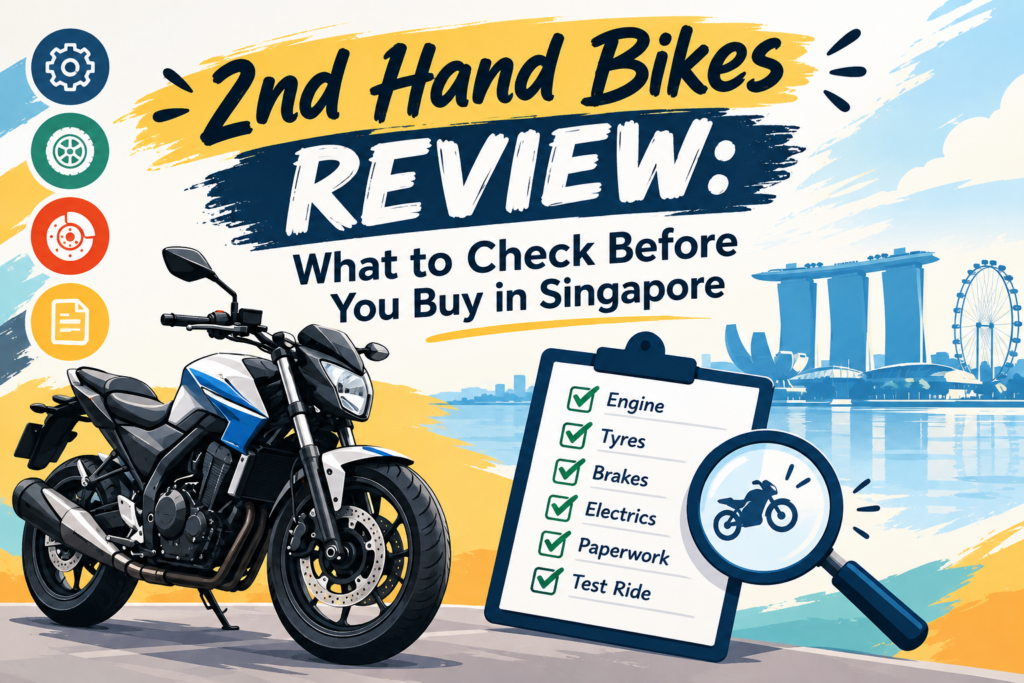
2nd Hand Bikes Review: What to Check Before You Buy in Singapore
Sep
2nd Hand Bikes Review: Buying a second-hand bike in Singapore feels risky when you cannot see the wheels up close. Every time you ride to a crowded mall, you dread sudden mechanical failures that waste time and money. Regulatory changes and surging fuel prices make this dilemma sharper than ever before. You need confidence before you sign that sales agreement.
The guide below explains the critical inspection steps you must follow. We break down how to spot hidden damage, verify engine health, and understand local warranty limits specific to Singapore. This practical checklist helps you avoid costly mistakes without needing a factory-cleaning budget. Stop trusting showroom lights alone and start trusting your senses instead. By following our simple review process, you will know exactly which questions to ask the seller. Get ready to save thousands on your next two-wheeled purchase. In the next section, we detail how to inspect the brakes and tires.,
Are You Ready to Ride? Your Complete Guide to Buying 2nd Hand Bikes in Singapore Without Getting Scammed
2nd Hand Bikes Review: Buying a 2nd Hand Bikes in Singapore is a rewarding journey but comes with high stakes. The allure of cost savings is real, yet the risks of purchasing a defective vehicle can wipe out your initial relaxation. This guide exists to empower beginners to navigate this competitive market safely.
Before even touching 2nd Hand Bikes, you must set a realistic budget that encompasses more than just the sticker price. In Singapore, you need to factor in the Common Ownership Certificate (COE), Road Tax, insurance, maintenance, and transfer costs. A sound financial foundation prevents future stress when you hit the return lane to the workshop to address hidden machinery upgrades.
Choosing the right machine requires comparing engine size and intended use against your current lifestyle and fuel economy. Reliability and comfort are paramount, especially for Singapore’s varied terrain. Your next step is a thorough pre-purchase inspection focusing on the engine, tyres, brakes, and suspension. A compromised chain or weakened electrical system could lead to roadside incidents in congested networks.
2nd Hand Bikes Review: 2nd Hand Bikes buyers must rigorously check the vehicle’s history and supporting documents. Verify ownership details, servicing records, and look for signs of past accidents or outstanding financing that could be a stumbling block during transfer. Transparency in these areas demonstrates the seller’s integrity and protects you from nasty surprises down the road.
A test ride is non-negotiable for any serious prospective buyer. Pay close attention to starting, acceleration, braking, and steering responsiveness. Strange vibrations or unusual noises from a worn-out suspension are warning signs that require immediate attention. Professional mechanics can often spot these issues before you walk away with your payment card.
Finally, always consider engaging a trusted workshop for a professional inspection. Their expertise helps identify hidden mechanical problems long before you commit, significantly increasing your confidence in the procurement process. By following this structured approach, you maximize value and minimize risk, ensuring your first ride is enjoyable rather than frustrating.
Setting a Realistic Budget That Includes COE, Road Tax, and Hidden Expenses
2nd Hand Bikes Review: When plotting a realistic budget for a **2nd Hand Bikes** in Singapore, the sticker price is merely the opening chapter. Buyers must calculate the total cost of ownership to avoid unpleasant surprises that could strain their finances later.
Beyond the cash price, mandatory expenses drastically alter affordability. Under Current COE regulations, every bike requires a Certificate of Application, though buying a second-hand one might console a larger spend on the vehicle by bypassing fresh COE requirements depending on the specific bike history.
2nd Hand Bikes Review: Here is the breakdown of hidden expenses affecting your final outlay: Road tax, which is calculated based on engine capacity, necessitates a reliable fuel economy to keep these costs down, and insurance premiums that vary by vehicle value and rider profile. Additionally, transfer fees and repetitive road tax upon annual renewal add layers of financial complexity not always visible at the deck of the bike.
Financing options transform cash savings into monthly vehicles, effectively locking you into a new budget structure. Interest rates have hovered lower, making 2nd Hand Bikes more accessible, but you must scrutinize EMI calculations alongside depreciation. Alternatively, a car purchase without loans remains the most sound plan; it allows you to weigh maintenance costs, ensuring you stick to a budget that includes roadside assistance, paintwork for any body damage, and electrical systems checks.
Ultimately, understanding these costs empowers your decision-making process for buying **2nd Hand Bikes**. By factoring in transfer fees, COE implications, and maintenance, you secure an investment that remains affordable while meeting your long-term riding goals in Singapore.
Q: Can I add private insurance to my current coverage?
Yes, some insurers allow adding additional insured individuals or vehicles without cancelling your main policy, but you must verify the specific 2nd Hand Bikes rules against your insurer. Contact your provider to confirm available extensions before making a change.
Q: How much should I budget for engine repairs?
You should not rely solely on the vehicle history; instead, allocate around $200-$300 for potentially expensive engine repairs if the bike has run out of tune. Regular servicing can help minimize these unexpected costs over time.
Q: What documents do I need for transfer fees?
You need the current Certificate of Ownership, purchase agreement, engine number proof, and a completed form submitted by the Vehicle Licensing Authority. Ensure all documents match the bike’s engine number to prevent rejection.
Q: Does financing affect my road tax calculation?
Financing does not directly affect road tax calculations, as tax is based on engine capacity and age. However, monthly payments may impact your liquidity for initial payments, taxes, and transfer fees.
Q: Can I add accessories to reduce road tax?
No, adding aftermarket accessories increases the insured value but does not reduce road tax calculations. Focus on keeping the engine number and vehicle registration valid to optimize your situation.
Quick Specs: Engine Displacement vs. Riding Experience vs. Fuel Economy
2nd Hand Bikes Review: When evaluating 2nd Hand Bikes in Singapore, engine displacement is often the single most critical specification for a beginner. Smaller, lower displacement engines typically offer superior fuel economy, which aligns perfectly with government preemptives and the high COE cost structure adopted for 2026. For commuters prioritizing practicality, a compact engine reduces the burden on your monthly driving expenses while ensuring the bike meets compliance standards effortlessly. This balance between power output and efficiency is why many first-time riders prefer these models for city cruising.
The riding experience you receive from a smaller engine is generally more manageable, requiring less physical effort during gear changes and acceleration. Beginners can anticipate smooth handling without the need for complex clutch control, significantly reducing the learning curve in traffic conditions. Additionally, these machines often feature robust braking systems and comfortable seating, making them ideal for daily commutes from the city center to.Connected Housing. When considering your stated budget, remember to factor in road tax, insurance, and maintenance, which are often lower for smaller displacements than larger industrial bikes.
- Fuel Economy: Lower engine sizes consume less fuel, saving you money over a thousand kilometers.
- Beginner Comfort: These bikes are easier to ride at low speeds and stop quickly in heavy traffic.
- Ease of Maintenance: Smaller engines generally require less frequent and inexpensive servicing intervals.
2nd Hand Bikes Review: Before you commit to a purchase, it is wise to inspect the electrical systems and bodywork, along with the chain and suspension, as these components can significantly affect the riding experience. Investigating the bike’s history, including servicing records and any outstanding financing agreements, is essential to ensure transparency. A professional inspection by a trusted workshop can help identify hidden mechanical issues, giving you confidence in your investment without needing to guess about the bike’s true condition.
In essence, selecting the right 2nd Hand Bikes allows you to enjoy a seamless, stress-free journey while adhering to Singapore’s strict regulations. Whether you are commuting or exploring the islands, smaller engines provide a reliable path forward with minimal financial stress.
Physical and Mechanical Inspection Checklist: Tyres, Brakes, Suspension, and Chain
2nd Hand Bikes Review: Before rolling your budget or checking the COE cost, the physical state of your potential 2nd Hand Bikes is critical. Singapore’s humid climate accelerates rust and corrosion, so focus immediately on the underframe and suspension joints for hidden moisture damage that could compromise safety.
Start by lifting the bike and inspecting the chain for severe rust or excessive slack, which often signals neglected servicing. Gently rotate the rear wheel to feel for gritty metal filings that indicate internal wear. Verify the brake pads thickness visually; if they look thin, budget extra for replacement soon after transfer to avoid a costly unpleasant surprise later in your journey.
2nd Hand Bikes Review: Move to the tyres and check for uneven wear patterns, which can signal alignment issues or just previous heavy use. Look for the wear bars at the tread base; if one side is significantly lower, the bike might have been tossed and turned in rush hour traffic without proper adjustment. Inspect the suspension oil for a dark, muddy color rather than a clear, golden hue, as this points to a potential seal leak.
- Electrical Systems: Flash the lights and check horn function to ensure the wiring isn’t frayed from heat and humidity.
- Bodywork: Run a fingernail over the paint job to detect mismatched patches, a common sign of past accidents.
Always consider having a trusted workshop perform a professional inspection before finalizing the purchase, especially if the vehicle is not from a documented enclosed seller. This ensures mechanical integrity before you commit financially. Prioritize quality over cheap 2nd Hand Bikes prices to avoid long-term regret, and remember that a forgotten brake check is an expensive lesson learned quickly in Singapore’s dense roads.
Decoding the History: How to Verify Ownership, Servicing Records, and Accident History
2nd Hand Bikes Review: Buying a 2nd Hand Bikes in Singapore requires due diligence, especially when verifying ownership and history. You must cross-reference the Vehicle Identity Card (VIC)—issued by the Traffic Management Corporation (TPC)—with the SMRT logbook to confirm current ownership status and check for any outstanding finance or liens.
Ownership transitions are legally recorded in the logbook; if the seller cannot produce the original logbook or sign it over, proceed with caution as this may indicate title disputes. Always request certified copies of the vehicle history report to ensure there are no hidden accident histories that could affect resale value or safety.
2nd Hand Bikes Review: When interpreting vehicle documents, pay close attention to the lien status section. If the bike was previously financed and the lender has not released the title, you cannot legally transfer the vehicle to your name without clearing the debt first. Contact the owner to confirm all repayments are settled, as purchasing a bike with unresolved finance often leads to legal complications and financial loss.
Additionally, the chassis number found on the viscosity black card must match exactly with the number engaved on the frame tube. Any discrepancy here is a major red flag for tampering or theft records, and must be investigated immediately before finalizing a deal. Ensuring these documents align protects your investment and maintains the integrity of your new ride.
For added peace of mind, consider having a third-party motorcycle inspector schedule a joint examination. Their expertise can uncover discrepancies between filed documents and physical condition, reinforcing your confidence before completing the purchase of second-hand motorbikes.
The Value of a Professional Workshop Inspection to Catch Hidden Mechanical Faults
2nd Hand Bikes Review: Buying 2nd Hand Bikes in Singapore requires careful financial planning, but sparing a few hundred dollars on a professional workshop inspection can save you from thousands in immediate repair bills later. While a layman might notice visible scratches or a sluggish engine, a seasoned mechanic can detect critical hidden mechanical faults that often lead to costly failures right after you pay.
The most common reason to skip this step is the assumption that a low purchase price handles every cost. However, your budget must realistically encompass transfer costs, COE, insurance, and potential maintenance INCP not covered by the seller. If a bike suffers from severe engine issues, that initial savings evaporates instantly, negating the value of your entire purchase strategy.
Skilled mechanics can identify subtle but dangerous issues that are invisible to the naked eye. These include hidden clutch slip, which causes power loss during acceleration, or shifted gear shafts that render the transmission unusable. Furthermore, fluid leaks—often an early sign of internal engine failure—can merge the holes in your budget immediately. A professional audit acts as a frustration-free purchase, ensuring the bike’s mechanical integrity is sound before you commit your funds.
Why a Thorough Test Ride of 2nd Hand Bikes Reveals Habits and Wear on Brakes and Japanese Steer Response
2nd Hand Bikes Review: A thorough test ride of 2nd Hand Bikes is your primary defense against hidden mechanical flaws, revealing wear patterns that a visual inspection simply cannot catch. In Singapore’s bustling urban landscape, where maintaining a reliable vehicle is crucial, knowing how to assess these bikes during a ride can save you from costly future repairs and safety hazards.
Verifying Critical Systems During a Test Ride?
2nd Hand Bikes Review: Start by setting a realistic budget that factors in the purchase price alongside COE, road tax, and transfer fees, as these hidden costs can significantly alter the total value. While inspecting the bike visually, listen for unusual noises such as creaks when shifting gears or a deadening click when turning the handlebars, which often indicate a worn Japan-made steering head seal. This specific component, known for its excellent Japanese Steer Response, can degrade over time, making the ride lazy or unpredictable.
Critically, check the brake feel by performing multiple stops at varying speeds to ensure the hydraulic brakes respond linearly without fading. If you detect spongy pedal resistance or a bi-directional grip, the brake hidden problems may require immediate replacement. Furthermore, shifting between gears should be smooth and immediate without grinding noises, which suggests the master-wheel motion chain or internal gears need servicing.
- Engine Response: Note if the bike starts easily and accelerates smoothly, avoiding any hesitation that suggests poor internal component conditions.
- Suspension Check: Bounce the bike gently on every bump to detect if the suspension, which aids in ride comfort, is still functioning effectively.
Professional inspection before purchase is highly recommended to identify these subtle issues before you commit. By testing how clutch leverage operates amidst rider habits, you ensure that the bike meets the demands of your intended use. Remember to consider maintenance costs, which vary based on the engine size and model, ensuring your investment remains financially sound.
Ultimately, a comprehensive review helps you navigate the shifting dynamics of buying used vehicles. When combined with careful documentation checks and financing options, you can confidently select the best model for your needs, ensuring a safe journey forward.
Should You Buy This 2nd Hand Bike in 2026? Our Final Verict Based on Budget, Specs, and Reliability
2nd Hand Bikes Review: Deciding whether to buy a 2nd Hand Bikes in 2026 depends heavily on your realistic budget analysis. While the initial purchase price is only half the story, you must factor in COE, road tax, insurance, and annual maintenance to truly understand the cost of ownership. A bike that looks ideal on paper might become a financial burden if its 2nd Hand Bikes running costs exceed your expectations for daily use.
Should You Buy This 2nd Hand Bike in 2026? Our Final Verdict
2nd Hand Bikes Review: This specific model represents a strong value proposition for beginners in the 2026 market, provided you prioritize reliable mechanics over flashy aesthetics. Its fuel economy and comfort levels align perfectly with urban commuting needs, making it a practical choice for daily riders.
However, potential buyers must carefully inspect the suspension to ensure it offers the expected ride stability rather than feeling compromised by previous wear. Always verify the 2nd Hand Bikes servicing history, as a gap of over two years without formal maintenance raises concerns about long-term engine reliability. While the 2nd Hand Bikes price point remains attractive compared to new models, the trade-off is lower theoretical resale capacity in the current market.
- Pros: Affordable entry price for beginners, decent fuel economy for daily Singapore traffic, and generally reliable beginner-friendly component layout.
- Cons: Limited resale value, potential hidden suspension wear if previously heavily modified, and a narrow price range that requires careful negotiation.
Recommendation & Next Steps
Verdict: Go — Only if you immediately book a professional inspection. This model fits best as a starter machine for those seeking reliability and low operational costs. However, before finalizing the transfer, strictly follow local regulations by commissioning a trusted workshop to perform a final physical inspection. They can assess 2nd Hand Bikes hidden wear, check electrical systems, and confirm non-disqualified mechanical issues, ensuring you enter this 2nd Hand Bikes acquisition phase with full confidence.
We at Speedzone specialize in offering top-quality servicing for a variety of premium motorcycle brands. Whether you ride a Yamaha, Honda, KTM, Suzuki, Kawasaki, SYM, Aprilia, Piaggio, or Mutt Motorcycle, you can trust us to keep your ride running smoothly.
Book Your Service Today
Ready to give your motorcycle the care it deserves? Or just curious to know more? With our premium motorcycle accessories available catering to every motorbike models. Book your motorcycle servicing with us or drop by our showroom today and experience the difference of expert servicing tailored to your brand and friendly staffs!
